Showing posts with label behavior. Show all posts

Monday, July 31, 2017

When Parents Are Bullied

Much has been written in both the academic and popular literature about bullying -- what to do if your child is bullied, how to avoid raising a child who bullies, tips for parents and teachers who encounter bullying, and more. But we recently encountered a book that looks at bullying from a different perspective, one that we previously would not have thought about in terms of bullying - when children bully their parents.

When Kids Call the Shots, by psychotherapist Sean Grover, LCSW, looks at children who might be labelled "bossy" or "difficult" or "temperamental" and considers their behavior through a different lens. Grover views these children as bullies, and the targets of their bullying behavior are their parents. Understanding how and why this behavior develops and what parents can do to change their child's behavior is the focus of Grover's book, which grew out of his more than 20 years of working with both children and adults and his own experiences as a parent.


The book examines different ways that children become bullies, focusing on the three most common kinds of bullies: the defiant bully, the anxious bully, and the manipulative bully. Grover looks at the forces that drive each of these kinds of behaviors in children and then discusses the kinds of parents who are most prone to being bullied by their children. He continues with steps families can take to put together a support team (school officials, mental health professionals, and others) and ways parents can act to stop bullying behaviors. Grover spends time discussing family crises that may trigger bullying behaviors, things like divorce, trauma, and financial hardship. 

The book has a positive approach and a hopeful message, focusing on the fact that there are reasons why children behave this way and why parents may be feeding into this behavior. And his specific guidance on how parents can improve their family dynamic is something that should be helpful for parents asking the question: "What happened to my sweet, adorable child?"

Friday, February 10, 2017

Book Review: How to Reach and Teach Children with Challenging Behavior

When I started my school psychology internship at a private K-8 school, I never expected to be standing in front of a classroom full of seventh grade boys. Little did I know, it was standard practice at this school to use all available staff to cover for absent teachers. This way, the “sub” would be a familiar face and, theoretically, able to continue with the planned curriculum in a way that an outsider could not. I thought this was a great idea, until it was my turn to lead a small language arts class for 60 minutes. Like many first-time teachers, I was given a harsh lesson in the realities of classroom management. It became immediately apparent that I needed help, so I took two steps.

First, I began observing my peers to see what strategies worked for them in their classrooms. This was a great way to learn about the culture of the school and what the students responded to. I also bought a book that looked promising, called How to Reach and Teach Children with Challenging Behavior, by Kaye L. Otten and Jodie L. Tuttle. It ended up living in my backpack for the rest of the year, because I could never be without it and its reproducible resources.

How to Reach and Teach
is a series of books published by Jossey-Bass Education that aims to provide teachers and other school professionals with interventions and strategies to help children with challenging behavior, ADHD, or dyslexia. There are also two books in the series focused on teaching in an inclusive classroom (i.e., a class with students in both the mainstream and special education programs) and using a balanced literacy approach. I have only used the book geared towards working with students who present behavioral challenges in the school setting, and find myself recommending it to all new school professionals, from teachers to psychologists to learning specialists.

The book takes a positive approach to behavior change with a focus on specific behavioral strategies to help individual students. It also includes detailed strategies for preventing challenging behavior and setting up a classroom that is conducive to learning. The book is user friendly and appropriate for teachers with even the most minimal psychology or classroom management training. It starts with the basics of the authors’ philosophy, which is heavy on developing respect for students and an understanding of why they behave the way they do. It goes on to explain how to use behavioral reinforcement for individuals and groups of students. There is also a chapter on “logical undesirable consequences” which, the authors point out, is not the same as punishment, which in the long run does not teach students the best way to move through school and life. Finally, the book explains the full process of implementing a plan, from operationally defining problem and replacement behaviors to tracking progress.

The book also includes lengthy examples of cases that have worked in the real world and a chapter on how to handle crisis situations. Those who have purchased the book are allowed to photocopy all the resources, which are printed on standard 8x11 paper. This book is one of many great resources for working with students who are having difficulty in a traditional educational environment, and it’s definitely a permanent fixture on my bookshelf.


Friday, September 30, 2016

Reward, Punishment, and ADHD

The effects of reward and punishment have long been under examination by research psychologists. From Pavlov’s dogs to Skinner’s rats to the continually evolving theory of behaviorism, we have gained much knowledge about how positive and negative reinforcement can impact our daily lives. While general principles have become fairly well understood, we know less about how reward and punishment may differentially impact particular groups. A recent study by a team of researchers from Japan and New Zealand set out to explore how reward and punishment may specifically affect children with Attention-Deficit/Hyperactivity Disorder (ADHD).


Groups of children with and without ADHD were presented with a choice of two computer games to play. In both games, a win would result in points and an animation; a loss would result in a point-deduction and a laughing sound. The latter (punishing) condition occurred more often in one game than the other, even though the frequency of point-awarding and animations were the same in both. While both groups of children indicated a preference for the less-punishing game, this preference was significantly more pronounced for the children with ADHD.

The implications of these results could extend to parents and educators developing behavior plans. An emphasis on positive, versus negative, reinforcement is already a widely-accepted tenet of good practice. However, a particular sensitivity to punishment in students with ADHD may warrant special consideration in developing plans that encourage, rather than discourage, efforts toward success.


Friday, August 19, 2016

“Plan B” for Challenging Behavior

One book we really like here at The Yellin Center is The Explosive Child: A New Approach for Understanding and Parenting Easily Frustrated, Chronically Inflexible Children by Ross Greene, Ph.D. The book’s been around for almost 20 years and, despite its name, is a great resource for anyone who is a parent or teacher of children who experience challenging behaviors. Almost every child could use help with some behavioral expectation, whether it’s escalating sibling rivalry or difficulty stepping away from social media as bedtime approaches. Greene’s book outlines a method of collaborative problem-solving, in which children and adults work together to solve problems and curb challenging behavior while improving communication skills.

Dr. Greene starts by debunking those myths we’ve heard so many times – that kids are choosing to behave badly and they just want more attention. The mantra of the book is that kids do well if they can; when the demands of a situation exceed the skills a child has to adaptively respond to those demands, challenging behavior will occur. In other words, lots of children want to succeed and follow the rules, but they are delayed in the development of some of the necessary skills for doing so. Children with executive functioning difficulties are particularly at risk, as they often have trouble with controlling their behaviors and emotions when things start to get heated. The goal then is to figure out what skills the child is lacking and how this is resulting in a behavioral difficulty. The method, which he calls “Plan B,” walks caregivers through three steps:
  • empathizing with the child by seeking out his or her perspective about the difficulties he or she is having
  • sharing the adult’s concerns respectfully by noting how it is affecting the child and other people in the child’s life
  • inviting the child to join in the process of brainstorming potential solutions that address the concerns of both problem-solving partners

“Plan B” helps parents, teachers, and students work on their executive functioning skills while they’re working through challenging behaviors. The book also addresses ways the process can be used with siblings, between two students, and as a collaboration among parents and teachers. Are you wondering why it’s called “Plan B”? The more traditional reward-and-punishment approach (“Plan A”) to sparking behavior change might work for a lot of students; but those who lack some of the executive functioning skills like inhibition, flexibility, and frustration tolerance need something that will help them build those skills up as part of the process. There’s a lot to learn from Dr. Greene’s collaborative approach to problem-solving, and many useful tools are available for free on the website.

Wednesday, April 27, 2016

Supporting Anxious Children

While collaborating with fellow teachers in different parts of the country, your blogger has noticed a common theme: anxiety in students is becoming a much more salient issue in today’s classrooms. Data supports the notation that anxious tendencies in children is on the rise; a study conducted by the National Institute of Mental Health found that 25.1 percent of kids 13-18 in the United States have been diagnosed with anxiety disorders. 

Many colleagues have shared that they feel ill equipped and under prepared to mitigate these types of social-emotional and behavioral challenges. But behavior and self-regulation aren’t the only concerns teachers or caregivers are faced with when supporting children with mental health issues. Students who are dealing with psycho-social stressors often struggle to focus on their learning and their academic performance often wanes as a result. For example, a study published in the Journal of Abnormal Child Psychology surveyed a group of 1,197 students without a diagnosed reading or math disability. The students who were diagnosed with an anxiety disorder were more likely to be in lower achieving reading and math groups.

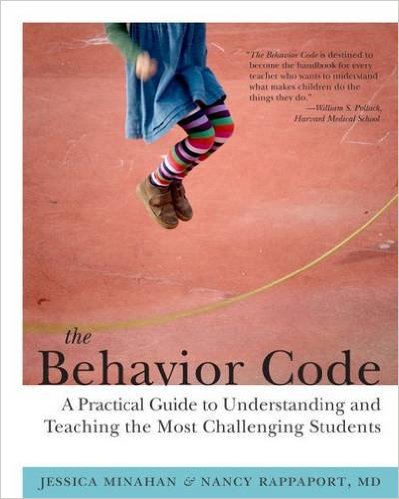
We have written before about self-regulation strategies and teaching children mindfulness; some of these ideas and tools may be effective interventions for helping students cope with anxiety and behavioral difficulties. However, another excellent resource is an informative book written by Dr. Nancy Rappaport and Jessica Minahan titled The Behavior Code: A Practical Guide to Understanding and Teaching the Most Challenging Students. The Behavior Code provides strategies to determine causes and patterns of behavior in order to effectively de-escalate challenging situations. The book is also a treasure trove of worksheets and practical resources.


In their book, the authors emphasize that misbehavior is a symptom of an underlying cause and is a form of communication that serves a function and has a pattern to it. They explain that a displayed maladaptive behavior is often the symptom of underdeveloped skills, such as weak executive functioning, poor self-regulation, or immature social skills. The behavior is often the child’s attempt at solving a problem the best way they know how. Children will continue to engage in the problematic behavior due to the function it serves in getting them a desired result. For example, whining may get the teacher’s attention. Often, when teachers systematically evaluate behavior they will discover a pattern to what triggers or causes the behavior and what function it is serving. Knowing the cause, function, and pattern to challenging behavior is the first step towards helping build effective, personalized, interventions in order to support the child

The authors also provide some tangible tips for working with anxious students:
  • It is common for teachers or caregivers to publicly praise positive behavior. However, children with anxiety don’t always want any extra attention from peers, which can make this strategy ineffective. Private or non-verbal praise is often better for students with anxious tendencies.
  • Students with anxiety often enter into negative thinking cycles. Vague or non-specific praise is easy for them to dismiss. The authors suggest using fact-based praise with specific examples of how the student has done. 
  • There are new biofeedback tools that can turn calming down into a game for students. One such tool is EmWave, which gives students a black and white picture that will slowly fill with color as the device monitors the child’s heart rate and the student begins to calm.

Friday, March 4, 2016

Teaching Children Mindfulness

At The Yellin Center we often work with students who struggle with attention and self-regulation. There is a large body of research to underpin the value of systematically teaching mindfulness to children. Not only can mindfulness training help children learn to self-soothe and monitor their behavior, but it also can develop intrinsic qualities like compassion, kindness, thoughtfulness, and caring.

There are several thoughtful, structured approaches to help develop a child’s awareness of the world around them and grow their emotional intelligence. Taking part in activities that promote mind-body awareness, such as martial arts, yoga, or dance, can be valuable for students who struggle to regulate their impulses. Mindfulness exercises are another great way for children to improve their ability to sustain focus, regulate their emotional responses, and make better decisions.

Some of our favorite resources are:

I am Yoga  by  Susan Verde and Peter H. Reynolds

We have written in previous blogs about children’s author and illustrator Peter H. Reynolds. This time he has teamed up with certified yoga instructor Susan Verde to create a book that encourages children to explore the relaxing world of yoga. The intention of the book is to foster creativity and self-expression in young people in a playful, engaging manner. The narration of the book encourages students to get moving as they are read to, and the back of the book houses a detailed explanation of all 16 poses they will be guided through.

A Handful of Quiet: Happiness in Four Pebbles by Thich Nhat Hanh and Wietske Vriezen


A Handful of Quiet
describes Pebble Meditation as a “unique technique to introduce children to the calming practice of meditation.” Pebble Meditation was developed by author Thich Nhat Hanh, who is a Buddhist monk and poet. He was nominated  for the Nobel Peace Prize in 1967 by Dr. Martin Luther King Jr. for his work in mindful living. The book guides students through a hands-on mindfulness practice that helps relieve stress, increase concentration, and develop gratitude.

Planting Seeds: Practicing Mindfulness with Children  by Thich Nhat Hanh, Chan Chau Nghiem and Wietske Vriezen

Mr. Thich Nhat Hanh and Ms. Wietske Vriezen bring forth another exceptional resource for developing mindfulness in children. Planting Seeds offers concrete activities and a detailed curriculum for parents and teachers to help children improve communication, grow confidence, and deal with difficult emotions. Techniques in the book and the accompanying CD include deep relaxation, conflict resolution, ethical guidelines for children, and mindful breathing.

I wonder…  by Annaka Harris and John Rowe

I Wonder... 
is a beautifully illustrated picture book written for children age one and above. The story follows a little girl as she confronts several questions about the world around her. Through the process she learns that it is okay to not know all the answers but rather that curiosity and awareness of the world is what matters. The story offers lessons in emotional intelligence and aims to build children’s confidence in themselves.

 
What Does It Mean to be Present? By Rana DiOrio and Eliza Wheeler

The award winning children’s book What Does it Mean to be Present? encourages students to be mindful by equipping them with practical ways to be present. It teaches students how to listen to themselves and others, as well has how to slow down and focus on what is going on in the world around them. This book is one of several in the What Does It Mean To Be …? series. So if you like this story, you may also enjoy author Rana DiOrio's books on developing kindness or a global mindset.


Wednesday, February 10, 2016

Helping Kids Cope with Frustration

Grit and perseverance are the topics of many books, blogs, and articles lately. Many experts believe that determination is a quality adults should strive to cultivate in themselves and in their kids, and most parents would probably agree that grit is important. But watching one’s child struggle with a task is not easy, and it can be difficult to simply sit back and watch, as many parenting experts suggest. Here are some tips – from a Scholastic article by Rachel Bowie and from our own toolkit --to help kids feel less frustrated so that they’re willing to roll up their sleeves and dive into another attempt at something challenging:

For children in early elementary school, says pediatrician and author Dr. Harry Karp, the style of an adult’s communication is key. Children of six and seven years old are well into developing their receptive language skills, but they’re still relative beginners, and frustration and anger may make them even less skilled at understanding what they’re hearing. Adults should accommodate by using short phrases and repetition. Calmly acknowledge the child’s feelings and show empathy without laying it on too thick. Say, “You’re frustrated, Sarah. I can see you’re frustrated. It’s hard at first. But I know you’ll get it.”

Kids in middle and high school often feel tremendous pressure to balance their social worlds, academics, family obligations, and extra curricular activities. And anxiety makes them more prone to frustration. One tack author Michele Borba, Ed.D. suggests is helping young people recognize the signs that they’re starting to feel frustrated so they can begin to calm themselves down. Does your teenager grind his teeth? Tense his shoulders? Start snapping at people or shut down? He may not be aware that he’s drawing near an explosion until it happens, so helping him spot warning signs can help him feel a sense of control. Next, give him some suggestions. Perhaps he can walk away from a task for five minutes or repeat a mantra to himself (“No one is perfect at first” or “I don’t have to be perfect; I just have to try my best”) until he feels calmer.

One of the most helpful things adults can do is to offer lessons on perseverance rather than tips for succeeding at a specific task. No kid of any age likes to be preached at, but children are interested in, and will be comforted by, stories of their parents’ own struggles. Share an anecdote about a time you failed at something you can now do with ease. Or reassure kids that no one is born an expert. For real-life examples of people who overcame difficulties to achieve great things, visit the blog Opening Lines.


Monday, July 13, 2015

Stressed Out? Lucky You.

We’ve written before about the positive impact some stress can have on test-taking. Now, recent research adds even more reasons to be at least a little grateful for looming deadlines or long to-do lists.

According to Dr. Salvatore Maddi of the University of California Irvine, people who understand that stress is inevitable tend to perform best under stress. Those who try to avoid it, on the other hand, are not only fighting a losing battle, they are setting themselves up to let stress get the best of them. Stress is not just a necessary unpleasantness, though. Stress is actually an opportunity: it can help us learn and grow.

According to Kelly McGonigal, Ph.D., a psychologist at Stanford and author of The Upside of Stress, our bodies release both nerve growth factor and a stress-recovery hormone called DHEA when we experience stress. Both of them increase neuroplasticity, priming our brains to learn from our experiences. Interestingly, undergoing stressful situations helps inoculate people for future, similar stresses; this explains why realistic training situations help prepare Navy SEALS or why seasoned emergency room doctors can keep their cool in the most chaotic of situations. 

Understanding stress can help make the difference between being paralyzed and empowered. Researcher Alia Crum tested this out with a group of students at Columbia Business School. Both groups underwent a stressful interview. First, though, half of the students watched a short video about how stress can improve performance. The other half watched a video that described the negative effects of stress. Sure enough, the group that watched the positive video actually released more DHEA during the interview, setting them up to be enriched (instead of crushed) by the experience.

To learn more, watch Dr. McGonigal’s TED Talk on this topic:


Appreciating the benefits stress can have on our ability to improve and learn may not make you feel thrilled when you’re totally swamped. But we hope it feels like a silver lining.

Monday, June 22, 2015

Combating Cyber-Bullying

Lots of adults today can remember being bullied as children. Years later, the sting of an unkind comment or others’ derisive laughter still hurts. But imagine that the witnesses to one’s shame were not limited to those within earshot of the slight. What if hundreds, thousands, or even millions of people, most of them strangers, could see what happened? And what if they could participate in the taunting? Cyber-bullying amplifies bullying to unimaginable levels, making its victims’ lives nearly unbearable.

And who better to talk about the topic of online humiliation that self-described “Patient Zero” Monica Lewinsky? Lewinsky’s scandal was a perfect storm in many ways: It was the most salacious political drama our country has ever experienced, and it happened just as internet technology was becoming ubiquitous. Instead of simply discussing her story among themselves after reading about her in the paper, people around the world could post comments about her for all to see.

Years later, Lewinsky is back in the spotlight, this time by choice. She is campaigning for a more compassionate online community, and she shares some excellent advice in a recent talk . Here are some of her key points, along with some of our own suggestions for parents struggling to help their children navigate these uncharted waters:
  • Parents of young children should do what they can to supervise kids’ time online. Consider allowing kids to go online only on a desktop computer in a public place (e.g. the kitchen) whose screen faces the room, not a wall. Stop by often to talk with them about what they’re viewing and participating in. This can be an excellent opportunity to teach kids about dangerous online behavior, like connecting with strangers. 
  • Parents who are more internet-savvy than their kids (and we know there are fewer and fewer of those out there) should be sure that they are connected with their little ones on any online network accounts their kids have. Whether it’s Facebook, Instagram, or Twitter, following your kids will serve two purposes: First, it will make them think twice about what they post, and second, it will give adults opportunities to talk with kids about what kind of posts they may consider appropriate for public knowledge. (“What do you think could happen if you share your address in your online profile?” “Do you think someone might misinterpret that picture if they don’t have any context?”)
Of course, parents can’t, and shouldn’t, monitor every facet of their kids’ online lives, especially as they get older. Instead, try to help kids see the people at the center of scandals as just that: people.
  • ·Avoid talking excitedly about celebrity scandals. Instead of watching shows dedicated to gossip, passing judgment in kids’ hearing about the decisions of perfect strangers, or picking up tabloids, adults should model compassion. Pointing out how embarrassed the subject of a shocking headline must be enforces their humanity and shows kids how to be empathetic. Comment that you’re certainly glad none of your mistakes were shared with the world. 
  • Lewinsky urges people to be “up-standers” instead of merely bystanders. Post positive, supportive comments, and make sure kids know you’re doing it. Compassionate responses can mean a lot to victims of online bullying, and your empathy can change the tone of an online thread. And report cyber-bullying when outlets have those options.
Lewinsky says, “We talk a lot about our right to freedom of expression, but we need to talk more about our responsibility to freedom of expression.” Help young people understand that the internet gives them great power, and along with power comes responsibility.


Monday, December 8, 2014

Books to Teach Social Skills

The Importance of Building Social Understanding

Developing social skills is a critical part of child development. However, it can be complicated to explain to students the importance and relevance of different behavior modifications in an engaging, meaningful way. As a classroom teacher, I often relied heavily on creative books to help set the stage and open a dialogue with students about behavior and behavior management. The following are a sampling of books that tackle multiple social areas that can be hard to explain to students. In my classroom, I always read social development stories in a whole class setting, and then engaged in a teacher directed discussion about the lesson behind each tale. Furthermore, having a framework of a story can be beneficial as a reference when giving students directives about the behaviors. For example, the story Decibella and her 6-inch Voice introduces a five-point voice scale to students, so often when I wanted to temper the vocal volume of student I would ask them where their voice was on the Decibella scale, and follow that prompt up with where it should be. It was a strong tool in helping manage the classroom environment, while also promoting behavioral self-monitoring in my students.

Book Recommendations
Skill taught: Understanding and Expressing Emotions

Grades: Preschool through Third Grade

Summary: An excellent book, with beautiful illustrations to teach students about complex emotions such as pride, fear, pain, curiosity, anger and disappointment. The story also gives students a way to articulate the emotions they are feeling, and an understanding how one might act when feeling a particular way. The text uses bias-free language and vocabulary to give students a framework to express their feelings.


Skill taught: Behavior Management

Grades: Preschool through Fifth Grade

Summary: An accompaniment to The Way I Feel, this book explains and details character traits such as compassion, curiosity, capability and bravery. The story uses beautiful illustrations and verse to describe behavior in different contexts and how different types of children act differently. Furthermore, the text defines new vocabulary describing behavior in a judgment-free way, and gives students a new wealth of language to describe their own actions. 

 
My Mouth is a Volcano by Julia Cook and Carrie Hartman
Skill taught: Managing thoughts and words without interrupting

Grades: Preschool and up

Summary: An award winning book created to teach children about controlling their thoughts and expressing their ideas at an appropriate time. The book is written in friendly, witty verse that is accompanied by beautifully illustrated imagery. The story provides teachers, parents and interventionists a fun way to teach students to listen to others and wait their turn to speak. 


Decibella and her 6-inch Voice by Julia Cook and Anita De Falla
Skill taught: Listening and Communication

Grades: Kindergarten through third grade

Summary: A colorfully illustrated and thoughtfully written story about a girl who learns to use and her adjust her voice to communicate with confidence. This story teacher students about the five voice volumes, and how one must adjust their levels for different settings. The story uses humor to teach students effective communication techniques, and also provides a section of tips for parents and teachers. 


Personal Space Camp by Julia Cook and Carrie Hartman

Skill taught: Respecting personal Space

Grades: Preschool and up

Summary: An exceptional book that uses humor to teach children about respecting and maintaining personal space in a way that is witty and engaging.


Grades: Kindergarten and up

Summary: A great team building book that uses humor to teach students the value of working together and sharing their resources. This book is part of Ms. Cook’s Best Me I Can Be! collection, which includes many other titles that are also worth exploring. The additional titles cover topics such as peer pressure, making friends, asking for help and receiving feedback.

Monday, September 29, 2014

New Study Looks at Social Difficulties in Children with ADHD

A new research study from Japan finds evidence of differences in the brains of children with ADHD which may be the basis of social difficulties which these children frequently encounter.

Children with ADHD often struggle with inattention, impulsivity, and hyperactivity, behaviors which can impair their interaction with peers. As one student we know with ADHD described efforts to arrange a social activity with other students who had similar difficulties, "It wasn't pretty. One kid wasn't paying attention and didn't realize we were trying to get together. Another decided at the last minute to do something else. And still another guy wanted to come, but had to stay after school since he was acting out in class." But scientists have questioned whether there is more to the social difficulties that children with ADHD encounter, beyond these behaviors.

In the present study, researchers used  non-invasive near-infrared spectroscopy to measure changing blood flow in the brain to uncover the neural basis for the recognition of facial expressions. Being able to pick up on facial cues is an important skill that helps children get along with one another and understand social cues and expectations. The researchers found that while their typically developing control group had changes in blood flow to theirs brains when they saw either happy or angry facial expressions, the children with ADHD only showed changes in blood flow -- and thus response to -- happy expressions. They did not respond to angry expressions.


This was a small study (with only 13 subjects and 13 controls) and much more investigation remains to be done. Still, it gives some sense of the neural basis for the social struggles some children with ADHD experience; if you can't tell if your friend is angry with you, you won't be able to respond appropriately and social relations may suffer as a result.

photo and graphics provided under CC license

Wednesday, July 30, 2014

Learn Mindfulness with Sitting Still Like a Frog by Eline Snel

Like that awful song your teenager has been playing on repeat all summer, the mindfulness trend is hot right now. Unlike that song, however, mindfulness is a trend we hope will stick around. Mindfulness can help improve attention and emotional resilience by simply encouraging people to be aware of what is happening around and inside them. Often it has been linked to meditation or yoga, but mindfulness can be taught in the context of everyday activities, too. Results of research exploring the effects of mindfulness suggests that it’s a very promising technique; children who learn mindfulness are able to sustain attention longer, resist impulses, self-soothe, and effectively control anxiety. In fact, in a recent blog post, we noted research that found that using mindfulness techniques has proven effective to reduce stress and depression and to improve parenting skills in parents of children with developmental disabilities.

For parents who think their children could benefit from mindfulness, Sitting Still Like a Frog by Eline Snel is an excellent resource. Snel, founder of the Academy for Mindful Teaching in the Netherlands, has worked to develop meditation and mindfulness training programs for more than twenty-five years. Her book is a user-friendly and effective tool that helps families use mindfulness and reap its benefits. The exercises in it are basic enough for children as young as five but nuanced enough to use with kids into their middle school years.

The book contains exercises for families to try together and explanatory passages aimed at adults that parents will find insightful and intriguing. In addition to the text, the book comes with an audio CD that leads listeners through more activities that promote calm and focus. Those suspicious that the book will smack of strange, new-age ideas will be pleasantly surprised by its down-to-earth tone and common-sense advice. To give you a sense of the program, here’s a short excerpt from the first track on the audio CD:

“A frog sits very still but is always aware of what is going on around it. It jumps, stops, and sits really still, being aware of everything around it. It only moves when it really has to, like when it’s hungry. It doesn’t waste energy doing things it doesn’t have to do. It’s aware of all the commotion going on around it, but it doesn’t react.”

Cultivating this awareness is a big part of Snel’s mindfulness training. In addition to learning to be attentive to their surroundings, kids are encouraged to turn the lens inward to find out what they’re thinking, feeling, and doing with their minds and bodies. Many children have difficulty understanding the escalation of their own impulses or feelings and aren’t sure how to control them, so providing kids with tools for this purpose can be enormously comforting. Parents can give staying power to the book’s worthy lessons by helping kids remember to use what they’ve learned when they’re presented with challenging situations.

Mindfulness can be very beneficial to children with attention difficulties and anxiety. But it can also help frazzled adults manage stress and feel more balanced. So, by sharing the lessons from Sitting Still Like a Frog with your kids, you may be doing yourself a favor, too.

Monday, December 2, 2013

Social-Emotional Education

While academic skills are an important part of what schools need to impart to their students, there are a number of competencies that are as important -- and sometimes more so -- in helping children become happy, successful adults. These competencies are generally referred to as "social-emotional learning" and have been the subject of much attention from schools, researchers, and organizations in all areas of education. Here at The Yellin Center, we look at social and emotional issues as potential areas of strength or challenge for all of the students we see, and have long noted the importance of what we call social cognition as a part of success in school and life.


CASEL, the Collaborative for Academic, Social, and Emotional Learning, is an organization whose mission is "to help make social and emotional learning an integral part of education from preschool through high school."

"Self-awareness: The ability to accurately recognize one’s emotions and thoughts and their influence on behavior. This includes accurately assessing one’s strengths and limitations and possessing a well-grounded sense of confidence and optimism.

Self-management: The ability to regulate one’s emotions, thoughts, and behaviors effectively in different situations. This includes managing stress, controlling impulses, motivating oneself, and setting and working toward achieving personal and academic goals.

Social awareness: The ability to take the perspective of and empathize with others from diverse backgrounds and cultures, to understand social and ethical norms for behavior, and to recognize family, school, and community resources and supports.

Relationship skills: The ability to establish and maintain healthy and rewarding relationships with diverse individuals and groups. This includes communicating clearly, listening actively, cooperating, resisting inappropriate social pressure, negotiating conflict constructively, and seeking and offering help when needed.

Responsible decision making: The ability to make constructive and respectful choices about personal behavior and social interactions based on consideration of ethical standards, safety concerns, social norms, the realistic evaluation of consequences of various actions, and the well-being of self and others."

CASEL works with schools, districts, and policy makers at state, federal and local levels to advance legislation and programs that promote social-emotional education in schools. Their work is highlighted in the first of a series of reports entitled From Practice to Policy, from the National Association of State Boards of Education.

No discussion, however brief, of social-emotional competence can be complete without mention of Daniel Goleman, a co-founder of CASEL and generally credited with popularizing the term "emotional intelligence" or "EQ" (as opposed to "IQ) in his best-selling 1995 book of the same name. By bringing the concept of emotional intelligence into popular culture, he helped to lay the groundwork for applying its tenets to education and business, and facilitating research into the connections between social-emotional competence and brain development. And, in his new book, Focus, Goleman discusses how the pathways that regulate social cognition and attention are interrelated. Dr. Yellin has read it and strongly recommends it.

Wednesday, October 9, 2013

How Do We Know What Babies Know?

Babies, it seems, do something new every single day. Before they are even able to control their own body movements, they are engaged in a furious observation of the world around them, learning from just about everything they see, hear, touch, taste, and smell. Although there is a wide range of “normal,” of course, lots of studies have determined which concepts babies understand at certain ages and stages. For example, there is evidence that babies recognize their mother’s face in as little as three days after birth and that they have a keenly developed number sense by six months of age.


But how can scientists determine what babies know? Asking a newborn whether the woman holding him looks like his mother isn't likely to elicit a useful response. One way to get a read on babies’ thought patterns is by performing a brain scan. But this technique isn't ideal. For example, a functional magnetic resonance image (fMRI) provides great images but is very expensive, and electroencephalography (EEG) is cheaper but doesn't yield information about impulses deep within the brain.

Instead of measuring brain activity, researchers have learned that babies’ behavior in response to stimuli can reveal a surprising amount of information about what goes on inside their heads. Most babies respond in predictable ways to novelty and many experiments take advantage of this tendency. Careful observation of babies has led to some useful, measurable methods that help researchers as they work to probe the minds of the very youngest people around.

Linguists, for example, are interested in the way very young babies hear sounds. Speakers of certain languages often cannot hear the difference between sounds in a foreign language; for example, Japanese and Chinese speakers struggle to differentiate between the /r/ and /l/ sounds, and /v/ and /w/ sound the same to speakers of Hindi and Thai. Are babies hardwired to speak a particular language from the moment they’re born, or is this selective deafness a learned trait?*

To determine what babies hear, scientists use the concept of novelty. Babies are provided with a high amplitude sucking device to measure their responses, then are exposed to sounds. To the baby, a high amplitude sucking device feels like a pacifier, but in fact it is connected to a system that measures the rate at which the baby sucks it. During the experiment, the baby listens to a recording of one of the target sounds over and over again. For a baby born in an Arabic-speaking environment, for example, researchers might choose to play “pah, pah, pah...” When the sound begins, the baby will begin to suck the pacifier at a faster rate, but as it grows accustomed to the sound, it will demonstrate its boredom by sucking more slowly. Then, suddenly, the recording will change; the baby will begin to hear “bah, bah, bah...” Adults and even young children who speak Arabic have great difficulty hearing the difference between /p/ and /b/, and most don’t notice when “pah” switches to “bah.” But most babies begin sucking much faster the instant the sound changes; their curiosity is aroused by the difference, and they become attentive and interested. To their older counterparts, the stimulus appears unchanged, but babies demonstrate a much keener sense of sound discrimination.

Another way to measure a baby’s perception is to record the amount of time she spends looking at something. Just as babies suck faster when they hear something new, they tend to look longer at things that are different from what they know or that violate their expectations. This concept, known as “preferential looking,” was first developed in the 1960s, and scientists still use it today. Researchers at Johns Hopkins University, for example, demonstrated that babies understand the limitations of the physical world by showing them a series events and recording their looking times. Some of the events were deemed “real,” in that they were possible, but some “magic” events were physically impossible. In one “real” video, a ball rolled up to a wall and bounced off. Babies weren't too captivated by that, but they couldn't take their eyes off a “magic” video of a ball rolling into, then through, a solid wall. This fascination indicates that babies as young as two and a half months had gained a great deal of knowledge about the physical properties of the world.

Babies may spend a lot of time gazing around them, reaching for objects, listening intently, knocking things over, and banging on surfaces. But the serious learning going on beneath the surface is anything but child’s play.


*Interestingly, the reason older children and adults can’t hear the difference between similar sounds in other languages has nothing to do with their hearing. The answer is found, instead, in the brain. Babies are born with more than 80 billion neurons (brain cells) and synapses (connections between brain cells) in their brains – more than are found in any adult. This means that they are prepared to detect all kinds of stimuli in the world. The problem, however, is that having lots of extraneous neurons and synapses means that information and impulses don’t travel very quickly. Imagine searching through a suitcase for a particular item; if the suitcase is filled with things, it takes a long time to find what one wants. Similarly, the multitude of structures in the infant brain can make it work more slowly. Just as taking out half of what’s in the suitcase can cut down on search time, babies’ brains reduce the synapses in the name of efficiency. As the baby observes and interacts with its environment, the cellular connections that aren’t needed get the boot. This regulatory process is known as pruning. So after spending a year or so in a Chinese-speaking environment, where the /r/ and /l/ sounds don’t contribute to meaning, the brain of an infant there would determine that being able to detect the difference between the two sounds is unimportant. That synapse is pruned, making way for more efficient synaptic connections that the baby has noticed are relevant. Pruning is thought to result in learning, as the brain customizes itself to perform optimally according to observed environmental factors.

Wednesday, February 20, 2013

Better Quality TV Programming Can Improve Behavior of Young Children

We've noted before that researchers have found that what children watch on television can impact their behavior. For example, the ability of a group of four-year-olds to maintain attention, control behavior, and solve problems was severely compromised after just nine minutes of watching a fast-paced cartoon.

Now, new findings just published in the journal Pediatrics note the results of a randomized controlled study of 565 three to five year-old preschoolers where researchers "developed and tested an approach in which preschool-aged children’s viewing habits were altered such that they substituted high quality educational programs for violence laden ones."


The study used parent education as the key to reducing the children's exposure to violent television and other media. Participating families received home visits, newsletters, and telephone calls that provided information on the benefits of educational programs, how to use blocking features on televisions to keep children from accessing violent programs, and recommended channels selected from those available to that specific family. In addition, families received DVDs with clips of "positive" programming, designed to capture the interest of parents and children and encourage them to seek out such programs. There was no effort made to curtail the amount of screen time, just the quality of programs to which the children were exposed.

The researchers found a significant increase in high quality viewing in the families that were encouraged to focus on educational programs, as well as a move away from violent viewing. Notably, there were also significant changes in "social and emotional competence," a result that was particularly strong in boys from low income households. The changes in viewing habits and resulting positive impacts continued for the months of post study follow up.

The study authors note, "Although television is frequently implicated as a cause of many problems in children, our research indicates that it may also be part of the solution. Future research to perhaps further enhance media choices particularly for older children and potentially with an emphasis on low income boys is needed."

Photo: CC by Sarah Reid

Monday, February 11, 2013

The Prevalence of Over-Protective Parenting

Yet another study has emerged which suggests that parents who shield their children from failure are likely doing more harm than good. In a recent article in The Atlantic, author and teacher Jessica Lahey summarizes the research on this subject and provides a few hair-raising stories of her own about over-involved parents.

The study surveyed “parenting professionals,” people like psychologists, counselors, and teachers about instances of hyper-protective parenting they have encountered. Some shared stories of parents being overprotective and too involved in their children’s lives. Others reported that they’d seen examples of parents who insisted on “taking their child’s perception as truth, regardless of the facts,” and “were quick to believe their child over the adult and deny the possibility that their child was at fault or would even do something of that nature.” Lahey proposes that the latter parenting style is the more damaging one. While some parents may feel that they are simply protecting their children, Lahey believes that they are in fact depriving their kids of the opportunity to solve their own problems and learn independence. Also part of this group are parents who bail their kids out of situations that might teach them responsibility, such bringing a forgotten assignment to school or demanding that a teacher change a child’s final grade.


Lahey implies that even if these parents don’t do actually complete students’ homework for them—something that, frighteningly, most teachers have encountered—they’re still preventing kids from developing other, arguably more important skills. Teachers, you see, have a hidden agenda. A teacher’s explicit curriculum is readily visible. This is the academic part of school, in which students learn facts and concepts about concrete subjects like math, science, and history. But the implicit curriculum is harder to see; in fact, most kids aren't even aware that it’s there. The implicit curriculum is a teacher’s way of helping kids learn important life skills, like keeping track of dates, pacing work, and organizing and being responsible for materials. It’s hard on a student when he procrastinates on a seventh grade science project and earns a poor grade for his sub-par work. But it’s even harder when, as an adult, he procrastinates on an important project in the office and has to present poor results to his boss. Suddenly the failed science project looks like an learning opportunity instead of a disaster. Kids whose parents shield them from the consequences of their irresponsible behavior may learn the explicit curriculum well. But they’re missing out on the critical lessons conveyed by the teacher’s implicit curriculum.

The thing is, if a child is going to learn from his mistakes, he has to be allowed to make some.

We want to be sure to present one very important caveat, however: If a child is clearly doing her best but continues to fail, her parents need to consider that something else may be going on. While we whole-heartedly believe it’s important to let children struggle and make mistakes when they have all the tools they need to succeed, asking a child with serious learning challenges to simply roll with the punches is simply not fair, and is likely to do more harm than good. We encourage parents who perceive that their child isn’t experiencing success, even with a great deal of time and effort, to consult the child’s teacher or other education professionals for guidance.

Read the full article from The Atlantic: Why Parents Need To Let Their Children Fail by Jessica Lahey

Monday, October 15, 2012

The Marshmallow Task: A New Perspective

Most, if not all of you, have heard about the ‘marshmallow task’ experiments conducted at Stanford University back in the 1960’s. In the experiments, a group of three-to-five-year-olds were given a choice. They could either eat one marshmallow immediately or wait 15 minutes and eat two marshmallows. In that study, the ability to wait for two marshmallows correlated with long-term success. The implications seemed obvious. Children with self-control early in life tend to succeed. I have heard some educators argue that the marshmallow task should be used in the admission process for competitive private schools. Others have suggested that the study demonstrated that people are poor because they lack self-control.


However, a study just published online in the journal Cognition by Celeste Kidd, a doctoral candidate at the University of Rochester provides a new perspective on this classic study. In her study, Kidd points out that the common interpretation of the classic marshmallow study is based on the assumption that waiting is always the best decision. But what if waiting is not the best decision? What if you can’t trust the adult making the promise and you don’t believe that they will actually deliver on their promise? Then, grabbing the marshmallow when you can is actually evidence of rational thought -- not impulsivity!

In the Kidd study, prior to beginning the marshmallow task, the children are provided evidence of the experimenter’s reliability. When children believed that the experimenter was reliable, they waited four times as long as those who thought that she was unreliable. In other words, children’s actions are influenced by their perception of the reliability of others' behaviors. While Kidd’s work does not mean that self-control is not relevant, it does strongly indicate that it is premature to conclude that self-control early in life is the major determinant of long-term success. When children cannot trust the adults in their life, seeking immediate gratification makes sense.

What is the take-home message? Children need the adults in their lives to be trustworthy, caring, and reliable.

Learn more about the Kidd study in the following video by the University of Rochester:


Friday, August 10, 2012

Suspension, Disability, and Race

A new report, Opportunities Suspended: The Disparate Impact of Disciplinary Exclusion from School, provides a disturbing perspective on the impact of school suspensions on students with disabilities and on African-American students (and on those students who fit into both categories).


The report, written by Daniel J. Losen and Jonathan Gillespie, is from the Civil Rights Project at UCLA and analyzes data released in March 2012 by the U.S. Department of Education

The report notes the enormous number of school days lost to suspension -- more than three million per year -- and the fact that districts that suspend more students do not show that removing so many disruptive students from their classrooms results in any benefit (in the form of increased test scores) to the other students in their system. 

Among the most compelling findings are:
  • the higher rate of suspensions for students with disabilities: 13%, or twice the rate of their nondisabled classmates,
  • higher rates of suspension for all African-American students: 17%, which is far higher than any other racial group, and
  • very high suspension rates for students who are both African American and disabled: 25%.
As we have noted before in this blog, there are special procedures in the Individuals with Disabilities Education Act that require an examination of the reasons a student with an IEP is being suspended and the relationship of that student's actions to his or her disability. This would be expected to result in fewer, not more, suspensions of students who have or are suspected of having a disability, not the greatly increased numbers revealed in the data contained in the report.
  
This is a well written and accessible report, worth reading for its analysis and suggestions for finding alternative approaches to discipline that do not result in excluding from school those students who often most need to be there.


Friday, June 22, 2012

WatchMinder: A Clever Tool to Send Reminders

Ever wish you could sit next to your child as he takes the SAT, simply so you could tap him on the shoulder now and then and mouth, “Stay focused”? Fantasize about sending telepathic messages to your daughter to remind her to report to the office after morning recess so she won’t forget to take her medication (again)?  

The WatchMinder may be the answer. This normal-looking watch is actually a powerful tool, allowing you to subtly send important reminders to your child or yourself.

The watch looks like any digital watch and its alarm function can be set to go off at any time for any reason.  Instead of a disruptive or embarrassing beeping sound, however, the watch vibrates so that only the user will know it has gone off. At the same time, messages you have entered in ahead of time flash across the top of the screen. Sending alerts like “Meds,” “bathroom,” or “pay attn.” will serve as invaluable reminders to people who are prone to distraction or who simply have a lot of things to remember. The watch is easily programmed from a PC. Before using in school, parents should check with administration to ensure tools of this kind are allowed.

Visit the WatchMinder website to learn more about how the WatchMinder can help people with ADD/ADHD, hearing loss, behavioral challenges, bedwetting problems, rehabilitation commitments, or medications to manage.

Monday, January 30, 2012

The Teenage Mind

In a recent article in the Wall Street Journal, Alison Gopnik, Professor of Psychology at the University of California, Berkeley, shares some fascinating, research-backed information about brain development and why it makes teenagers behave the way they do. Teenagers, she writes, are products of their biology and their environments.


Many adults simply cannot understand why teenagers, even those who seem grounded and smart, engage in such reckless behavior. Gopnik shares results from recent studies from Cornell Medical College's Sackler Institute, which suggest that teenagers may engage in risky behavior because they are more satisfied by rewards than are adults. Evidence suggests that while they understand risk, taking chances feels worth the jeopardy in which they may place themselves. Particularly rewarding are perceived social benefits. 

Gopnik’s article also explores the brain’s control systems – that is, the areas in the frontal lobe that govern motivation, emotion, decision-making, long-term planning, and gratification delay. These brain functions develop through experience, but because today’s adolescents are focused on going to school and learning about a variety of topics (as compared with, say, the apprenticeship models used for education in bygone years), their experiences are not directly related to adult life. Gopnik says that there’s nothing wrong with this, and points out that average IQ scores have risen as people’s formal education has increased in duration. Still, it explains why teenagers may dive into a pursuit with an abundance of passion but lack the motivation and discipline for the kind of follow-through adults feel they need.

Pointing to the importance of experience in building up the frontal lobe, Gopnik suggests that additional schooling, such as extra instructional time, is not the answer. She’d like to see students engage in more apprentice-like experiences outside of school to give them opportunities to experience learning outside of the classroom. Teenagers need practice shouldering responsibilities in a supported environment so that they can make mistakes and learn from them.


Photo used under Creative Commons by Michael Robinson