Showing posts with label bullying. Show all posts

Thursday, February 8, 2018

Dealing with Bullying in NYC Public Schools

We have written before about a number of issues relating to bullying:

and even about when kids are bullying -- or at least manipulating -- their parents.

To add to these resources, we have recently come across a very detailed and practical guide to policies and practices relating to bullying in the New York City Public Schools, prepared by Advocates for Children of New York (AFC), a wonderful nonprofit resource for New York City families. 

AFC’s Guide to Preventing & Addressing Bullying was issued in December 2017 and includes specific procedures, links, and telephone numbers that can be used when children and families are struggling with bullying. Also included in the Guide are discussions about what constitutes bullying, what happens once a complaint is filed, and how bullying can be prevented.

 
This is a worthwhile reference for every public school family in New York City. .


Monday, July 31, 2017

When Parents Are Bullied

Much has been written in both the academic and popular literature about bullying -- what to do if your child is bullied, how to avoid raising a child who bullies, tips for parents and teachers who encounter bullying, and more. But we recently encountered a book that looks at bullying from a different perspective, one that we previously would not have thought about in terms of bullying - when children bully their parents.

When Kids Call the Shots, by psychotherapist Sean Grover, LCSW, looks at children who might be labelled "bossy" or "difficult" or "temperamental" and considers their behavior through a different lens. Grover views these children as bullies, and the targets of their bullying behavior are their parents. Understanding how and why this behavior develops and what parents can do to change their child's behavior is the focus of Grover's book, which grew out of his more than 20 years of working with both children and adults and his own experiences as a parent.


The book examines different ways that children become bullies, focusing on the three most common kinds of bullies: the defiant bully, the anxious bully, and the manipulative bully. Grover looks at the forces that drive each of these kinds of behaviors in children and then discusses the kinds of parents who are most prone to being bullied by their children. He continues with steps families can take to put together a support team (school officials, mental health professionals, and others) and ways parents can act to stop bullying behaviors. Grover spends time discussing family crises that may trigger bullying behaviors, things like divorce, trauma, and financial hardship. 

The book has a positive approach and a hopeful message, focusing on the fact that there are reasons why children behave this way and why parents may be feeding into this behavior. And his specific guidance on how parents can improve their family dynamic is something that should be helpful for parents asking the question: "What happened to my sweet, adorable child?"

Monday, February 8, 2016

Long-Term Impact of Bullying

We’ve blogged about bullying several times in recent posts – including looking at the impact of peers on stemming bullying behavior and using technology to reduce bullying. Unfortunately, the occurrence of bullying, with one in four students reporting being victims, is all too common itself.  The importance of preventing such cruelty is intuitive, but some recent research  has yielded data that highlights the seriousness of this issue.


In an article published late last year in JAMA Psychiatry, a team of researchers from Finland and Israel looked back at data collected in 1989, when over 5,000 eight-year-olds in Finland were surveyed about their experiences, or lack thereof, with bullying.  The researchers then looked at national health records to see if these same children went on to receive treatment for psychiatric disorders when they were between the ages of 16 and 29 years old.  They found that being bullied when young correlated, after adjusting for other factors linked to psychiatric risk, with nearly twice the risk of needing psychiatric treatment later in life.  It is also interesting to note that most of the eight-year-olds who bullied others had existing psychiatric symptoms at that time as well as later.  This suggests that incidents of bullying should be red flags for both the victims’ and the perpetrators’ need for help.

Photo credit: One Way Stock via flickr cc

Wednesday, January 13, 2016

Tech to Combat Bullying

We've written a number of times about bullying - most recently about how influential students can help curtail bullying. But bullying continues to be a troubling issue, leaving kids and adults alike feeling hurt and bewildered. This is the age of the Internet, however, so never fear: Tech has come to the rescue yet again.

Parents may want to download KnowBullying, an app from the Substance Abuse and Mental Health Services Administration. The app provides users with starters for tricky conversations, shares warning signs to watch for, issues reminders to check in with kids, and provides numerous helpful tips. There is a section for educators, too, which is helpful because StopBullying.gov identifies school staff awareness as a key factor in prevention of bullying.


Kids who aren’t sure what to do about teasing will be relieved to discover an app called StopIt. Many young people don’t report bullying to an adult because they are embarrassed or fear being labeled a tattletale. StopIt allows them to report bullying to their school anonymously, straight from a smartphone. Currently, more than 80 schools in the United States use StopIt, and the number is growing. (StopIt is available to corporations, too, in efforts to curb unethical or illegal behavior and financial and reputational risks.)

One of the most effective ways to stop bullying starts with kids themselves. Even if your child is not a victim, he likely witnesses, or has witnessed bullying at school, and if he’s like most kids, he’s not sure what to do about it. StopBullying.gov’s video Be More Than a Bystander can help him understand bullying so he’ll be empowered to act the next time he sees cruel behavior.

Friday, January 8, 2016

New Study on Impact of Influential Students on Bullying

Reducing and abating bullying within schools is a focal point for teachers, parents, and policymakers. There are a plethora of programs, tools, and research into the topic and yet little significant evidence has been yielded on how to definitively curb bullying. A new study from researchers at Princeton University (working with colleagues from Rutgers and Yale) suggests that key, influential students may be able to hone and shape a school culture that is intolerant of bullying. Theories of human behavior posit that individuals often attend to and emulate the behavior of people within their community in order to learn the social norms and constructs. Researchers used this notion to identify, often through social media, key influencers in the social network of 56 middle schools in New Jersey, and analyzed their ability to reduce bullying and school conflict.

Current anti-bullying programs are constructed by adults to address adult defined problems. The distinguishing feature of the program model used in this study is that researchers trained the students on anti-conflict ideologies and then let them independently lead their own messaging campaigns. This gave the autonomy to each student to change and shape their school culture by addressing the problems they saw using their own voice. Students were encouraged to make their anti-conflict stance well known through social media posts, and printing posters they designed, while also suggesting positive ways to resolve issues they confronted in their own smaller social circles.

The report, “Changing climates of conflict: A social network experiment in 56 schools,” found that the middle schools who used social influencers saw a 30% decrease in student conflict over the course of the year. The rate of decreased student conflict also appeared to be correlated to the number of social influences each school had; the more social influencers present in a community, the higher the reduction in bullying behavior.

For more information about the program used in this study or to review the anti-bullying curriculum they used, head over to the Roots program. The researchers at Princeton’s Woodrow Wilson School of Public Health have generously made their anti-bullying curriculum open source for anyone interested in using their ideas in their own communities. The curriculum is "user friendly" and uses specific examples and illustrations to explain how communities of influence work,

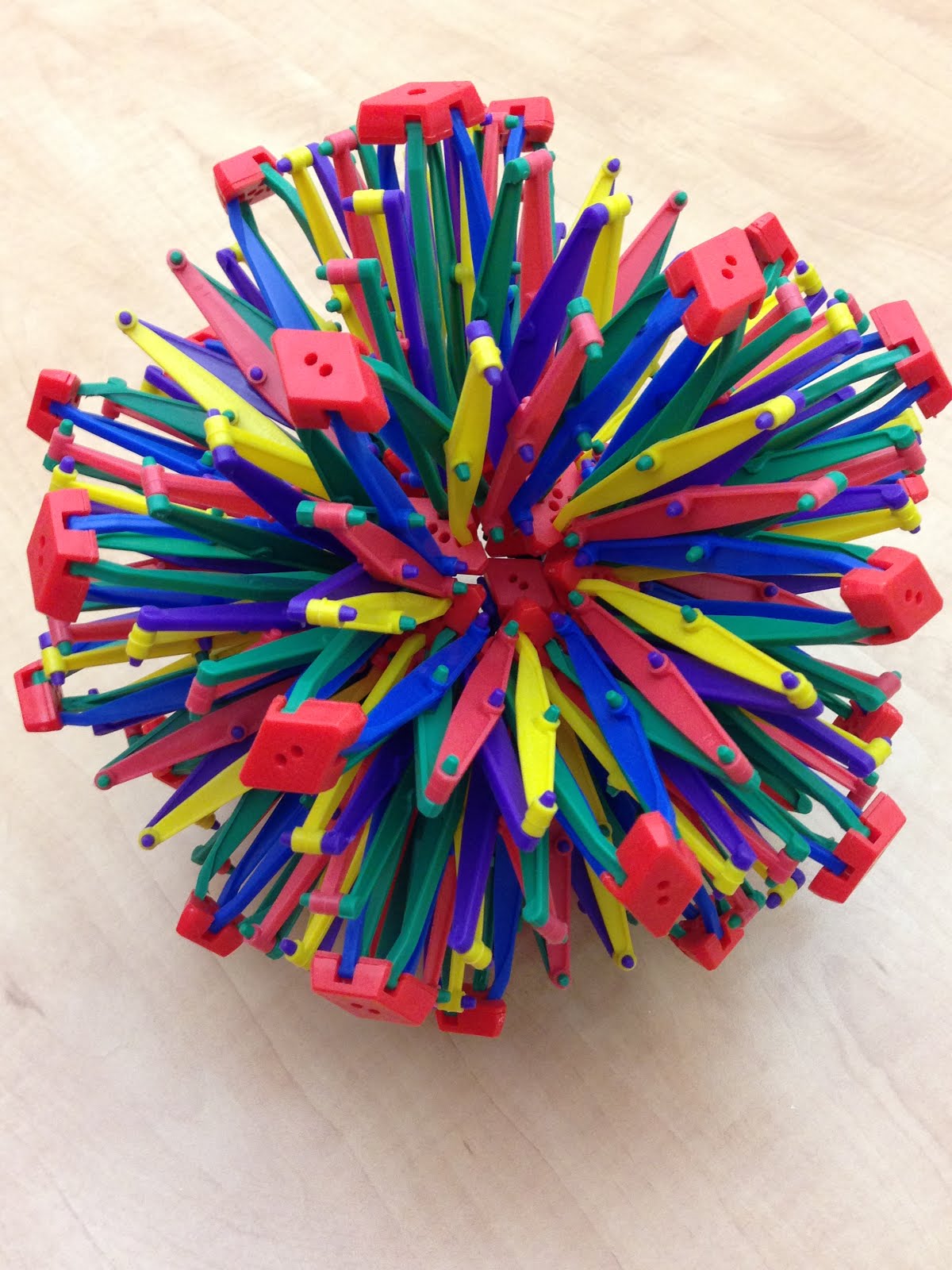
For example, the Hoberman Sphere functions as both a toy and a visual reminder of social networks. When expanded, it represents the way in which communities of influence can have an expanded impact.
.. 
We are excited to see a program that empowers students to make a tangible change in their own communities, using their own grass roots ideas of how exactly to affect that change. We believe there is a lot of power in a program that tackles bullying from the bottom up, rather than the conventional top-down approach.

Monday, June 22, 2015

Combating Cyber-Bullying

Lots of adults today can remember being bullied as children. Years later, the sting of an unkind comment or others’ derisive laughter still hurts. But imagine that the witnesses to one’s shame were not limited to those within earshot of the slight. What if hundreds, thousands, or even millions of people, most of them strangers, could see what happened? And what if they could participate in the taunting? Cyber-bullying amplifies bullying to unimaginable levels, making its victims’ lives nearly unbearable.

And who better to talk about the topic of online humiliation that self-described “Patient Zero” Monica Lewinsky? Lewinsky’s scandal was a perfect storm in many ways: It was the most salacious political drama our country has ever experienced, and it happened just as internet technology was becoming ubiquitous. Instead of simply discussing her story among themselves after reading about her in the paper, people around the world could post comments about her for all to see.

Years later, Lewinsky is back in the spotlight, this time by choice. She is campaigning for a more compassionate online community, and she shares some excellent advice in a recent talk . Here are some of her key points, along with some of our own suggestions for parents struggling to help their children navigate these uncharted waters:
  • Parents of young children should do what they can to supervise kids’ time online. Consider allowing kids to go online only on a desktop computer in a public place (e.g. the kitchen) whose screen faces the room, not a wall. Stop by often to talk with them about what they’re viewing and participating in. This can be an excellent opportunity to teach kids about dangerous online behavior, like connecting with strangers. 
  • Parents who are more internet-savvy than their kids (and we know there are fewer and fewer of those out there) should be sure that they are connected with their little ones on any online network accounts their kids have. Whether it’s Facebook, Instagram, or Twitter, following your kids will serve two purposes: First, it will make them think twice about what they post, and second, it will give adults opportunities to talk with kids about what kind of posts they may consider appropriate for public knowledge. (“What do you think could happen if you share your address in your online profile?” “Do you think someone might misinterpret that picture if they don’t have any context?”)
Of course, parents can’t, and shouldn’t, monitor every facet of their kids’ online lives, especially as they get older. Instead, try to help kids see the people at the center of scandals as just that: people.
  • ·Avoid talking excitedly about celebrity scandals. Instead of watching shows dedicated to gossip, passing judgment in kids’ hearing about the decisions of perfect strangers, or picking up tabloids, adults should model compassion. Pointing out how embarrassed the subject of a shocking headline must be enforces their humanity and shows kids how to be empathetic. Comment that you’re certainly glad none of your mistakes were shared with the world. 
  • Lewinsky urges people to be “up-standers” instead of merely bystanders. Post positive, supportive comments, and make sure kids know you’re doing it. Compassionate responses can mean a lot to victims of online bullying, and your empathy can change the tone of an online thread. And report cyber-bullying when outlets have those options.
Lewinsky says, “We talk a lot about our right to freedom of expression, but we need to talk more about our responsibility to freedom of expression.” Help young people understand that the internet gives them great power, and along with power comes responsibility.


Monday, February 6, 2012

Dealing with Bullying - Books for Children and Adults

Stories are a great way to for kids to navigate the difficult waters of growing up. Literature allows children to safely explore tough issues like potty training, jealousy, divorce, or the death of a loved one. Bullying can be one of the most painful issues many kids contend with in their daily lives, and books can present them with the heroes they need to deal with difficult and hurtful experiences caused by bullying.

Whether a child in your life is the victim or the instigator of bullying, these books can provide a medium for thinking about their feelings and actions:

The Meanest Thing to Say – by Bill Cosby
Ages 4 and up

After engaging in a mean game with some of his friends, Little Bill gets some good advice from his dad about how to keep both his friends’ respect and a clear conscience.


My Secret Bully – by Trudy Ludwig
Ages 5 and up

The protagonist of this book deals with a friend who can be downright mean sometimes. My Secret Bully is prefaced by a statement from the founder of the Ophelia Project and includes helpful tips, discussion questions, and other resources for helping girls deal with bullying.


Mr. Lincoln’s Way – by Patrician Polacco
Ages 6 and up

The kindly, insightful principal in this book sees through “Mean Gene’s” unkind behavior and tries to help him, and the other students at his school, understand that being different is special.


For adults, Margaret Atwood’s Cat’s Eye explores the painful relationship between a protagonist and her childhood “friend,” who dishes out a combination of sweetness and cruelty that is both confusing and hurtful. The book delivers surprising insights into what it’s like to contend with “mean girls” lurking in schoolyards without discounting these girls’ hidden anguish.

For a fantastic list of other titles, visit the Santa Clara County Library’s "Books About Bullying" page. Browse suggested fiction and nonfiction titles for kids in grades 3 through 8, and check out recommended titles for adults to learn more about bullying.

Thursday, February 24, 2011

Thursday Links: Paying Kids to Study, Bullying Students with Disabilities, and more


Should We Pay Kids to Study? (NPR)
Hyper One Day, Calm the Next (Scientific American)
Students With Disabilities Often Targeted by Bullies (On Special Education)
Where Digital Natives Roam, Paper and Pencil Have Place, Too (Gotham Schools)
Study Warns Against Energy Drinks for Kids, Teens (Washington Post)


Photo used under Creative Commons from striatic

Monday, October 18, 2010

October is Bully Prevention Month

We've all heard about tragic results that can occur when students are bullied or harassed by classmates. Whether bullying is prompted by race, religion, sexual orientation, or occurs because of mean or thoughtless young people seek to hurt or demean others, it is a problem that has been made all the more complicated to solve because of the instant information world in which we live.  

The Pacer Center in Minnesota has created an array of resources for young children, teens, schools, and parents to help educate children about bullying. The key is not just to encourage kids not to be bullies, but to educate them to speak out and take appropriate actions if they are the subject or bullying or if they observe bullying taking place. 

More locally, CAPS, Child Abuse Prevention Services, based on Long Island, is building on its long time work on this issue and establishing a Bully Prevention Center to provide a place for parents to turn for education and support and helplines for children and parents faced with bullying. The Helpline is staffed by professionals with expertise in bullying and cyberbullying. Contact numbers are 516-621-0552 and 631-289-3240 (ext 109).The email address is bullyhelpline@capsli.org. All inquiries are confidential.

Research has shown that interventions aimed at raising awareness, establishing rules, and counseling individual students about bullying can have meaningful results. Learn what your child's school is doing about all kinds of bullying. Speak to your child about how to avoid being a bully or a passive by-stander to bullying, or a silent  victim of bullying. And check out these websites for more important information.

Monday, October 12, 2009

Teasing and Bullying

A newsletter from a terrific group operating on Long Island, Child Abuse Prevention Services -- CAPS -- reminded us of the harm that can be done to children who are the victims of teasing and bullying.

The frequent target of such behaviors is the child who is a bit different from her classmates, who may march to his own drummer. He or she may have low self esteem or poor social skills. Sometimes, the same issues that make a child a target of bullying will make it more likely that a particular child can be "egged on" by classmates to take the role of bully, rather than victim. A good discussion of the impact of bullying on children with learning and attention differences by Marlene Snyder, Ph.D., discusses the damage bullying causes for both victim and aggressor.

We recently learned that a student who had visited the Yellin Center was the victim of repetitive teasing by classmates. The student's mother explained that when she brought this hurtful behavior to the attention of her child's school, she was advised that the school had a strong policy against teasing and bullying and that the students who had targeted her child would soon find the tide of their classmates' opinion turning against them. We wonder how long the victim would need to suffer for the social system in that competitive school to "solve" the problem.

CAPS firmly believes that bullying, constant criticism, threats, and other similar sustained and repetitive patterns of behavior that hurt a child's emotional development or sense of self worth are forms of emotional abuse. It notes, on its website, that national figures indicate that, one in 10 students in grades six through 10 report being bullied "sometimes" or "weekly" and that in the average classroom of 20 students or more, two to three students spend every day in fear of being bullied, harassed or worse.

CAPS brings educational programs on child abuse and bullying into local schools by means of volunteer educators and offers programs for parents and educators on issues ranging from child abuse to internet safety. Long Island parents should learn more about these programs.