
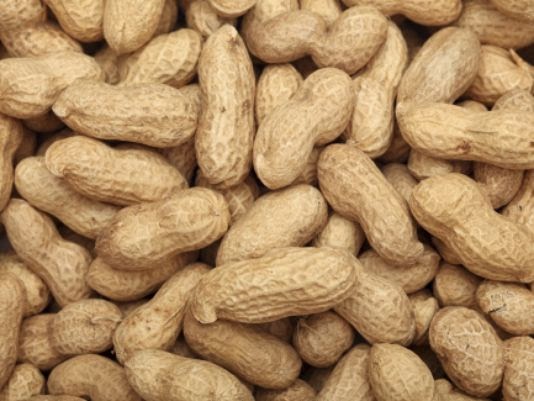
It seems sometimes that food allergies are on the rise. More and more menu items and food packages are stamped "gluten free" and peanuts are forbidden in some classrooms and even entire schools. But, according to Dr. Marshall Plaut, Section Chief of Food Allergy, Atopic Dermatitis and Allergic Mechanisms of the National Institute of Allergy and Infectious Diseases, the jury is still out as to whether more of today's kids have allergies than was the case in the past. The Centers for Disease Control and Prevention has stated that more children had food allergies between 1997 and 2011 than in prior years; however, in an article in Vanderbilt Magazine, Plaut describes the statistic as "relatively anecdotal."
Milk, eggs, peanuts, tree nuts, fish, shellfish, soy, and wheat make up the "Big 8," the most common allergenic foods. Although food allergies are triggered by specific components within foods, the reactions they cause in allergy sufferers—ranging from mild upset stomach to skin conditions to severe anaphylaxis—are actually caused by the person's own body. The immune system of someone with a peanut allergy responds to the presence of peanuts as it would to a threat from, say, malicious bacteria. Interestingly, some allergies, particularly those to milk and soy, can be outgrown. Others, like peanut, tree nut, and fish/shellfish allergies, tend to be life-long. And some people may develop allergies in adulthood.
If food allergies are indeed on the rise, no one seems to know why. One theory centers around people's recent fixation with cleanliness. Over-use of antibacterial products, according to the "hygiene hypothesis," has interfered with the normal development of children's immune systems. Another theory claims the opposite: that the presence of more pollution in the water and air and chemicals in the processed foods that make up more and more of our diets are causing children to develop allergies.
Whatever the cause, allergies can dominate the lives of families with children whose responses can be severe. Dr. Jane Choi, Allergist and Assistant Professor of Medicine at Vanderbilt University Medical School, recommends that her patients keep food journals to try to pinpoint exactly what they react to. Sometimes this can be tricky; for example, a reaction to french fries may not indicate a potato allergy but actually a corn allergy if the fries were cooked in corn oil. Choi also directs patients to carry two EpiPens in case one misfires.

Trying new foods can be a scary proposition for children with allergies (and their nervous parents); one approach, described in the Vanderbilt Magazine article, is to try a very tiny bit of the new food and then wait at least five minutes. If there is no reaction, it may be safe to try a little more. If the child experiences tingling in his mouth, a skin reaction, or an upset stomach he should not eat any more of the food and should brush his teeth or rinse thoroughly with water or mouthwash to avoid ingesting any more. This should only be tried if your child's physician recommends it; dealing with possible allergic reactions should not be a "do it yourself" project.
Parents whose children have food allergies should be certain that there is a 504 Plan in place for their child and that his teachers, the school nurse, and the school administration know about the allergy and know how to treat allergic reactions. They should provide an EpiPen or equivalent device for each classroom in addition to the pens their child carries. Note that not all schools permit young children to carry their own EpiPen. The 504 Plan should be reviewed at least annually and updated as needed. Parents also need to make sure that the 504 Plan doesn't just stay on file in the nurse's office; school staff need to know what steps to take and whom to call in case of an emergency.
The public demand for allergen information may make things tricky for the food service industry. But for those who suffer from food allergies, the trends of thoroughly labeling foods and providing food options free of the Big 8 make life with food allergies a little easier to swallow.


