Showing posts with label games. Show all posts

Monday, February 3, 2020

Sight Words – Part Five: Games!


We're winding up our series on sight words with some games to play in class or at home. 

Games can make for the best practice! Here are some fun ways to drill sight words in a playful way that will keep kids engaged. As a bonus, you can use sight word flashcards for many of them, making the set-up that games require less time consuming.

Tic Tac Toe
There are two variations of this game. Both begin with sight word flashcards face down in a pile. To play the simpler version, each player must draw a card and read it aloud before marking either an X or an O on the board. To make it more challenging, be sure each player has a pen in his own color. The first player will draw a sight word card and read it aloud to the other player. Instead of writing an X or O, the second player must spell the sight word in the square he chooses.

Fishing Game


There’s no competition here, but kids think this game is tremendously fun anyway. If you’re pressed for time, put a paperclip on each sight word flashcard. If you have time to really get into the theme, cut out simple paper fish and write a sight word on each, then slide a paperclip over each fish’s head. Put all the prepared words into a very large bowl or bucket. Now you need a fishing pole: tape a piece of string 18-24 inches long to a ruler and affix a magnet to the end. Give the pole to the child and show him how to dip the magnet into the “pond.” He should read the word on each fish he catches, then go back for more!


Memory 
This old favorite is great for practicing sight words. You’ll need two sets of flashcards with sight words written on them. Eight to ten pairs seems to be a good number—fewer than that is too easy, and more than that is overwhelming. Mix the cards up and turn them face down, arrange them into a rectangle, and take turns looking for matches. Make sure each player reads the words aloud as he turns the cards over. For extra practice, when the game ends each player should read their cards aloud while counting them to determine the winner.

Go Fish
You’ll need quite a few sight words for this game - at least twelve - but the good news is you can use the pairs of cards you made for Memory. Give each player three or four cards, which he should keep hidden. If you’re using flashcards, these will be unwieldy to fan out in one’s hand like playing cards, so cut a file folder in half and give a piece to each player. The folder can be propped up in front of the player so that he can spread his cards in front of him in secrecy. The rest of the cards go face down between the two players. The first player should ask the second if he has a particular word. If he does, he must give his card to the first player. If not, the first player must “go fish” by drawing from the pile in the middle. The game continues until someone runs out of cards, and at that point the one with the most matches wins.


Wednesday, April 11, 2018

More Educational Games

Last week we shared some of the educational games we have included in the Resources section of our website. We know that some of the information on our site is tucked away in its "digital corners" and may not be obvious even to families who visit our site often. So we are shining a light on some of these excellent resources that we often recommend to the students and families we serve. Here are our suggestions for games, sites, and apps that build skills in math, language arts, and logic:

MATH

Game Classroom - kindergarten - grade 6
This site is arranged by grade and topic. Each option provides sample problems for students, teaching tips for adults, and links to online resources for more teaching tips. Instructional material is accompanied by complementary games. While many of the games on this site cover topics appropriate for upper elementary school-aged students, their formats are not as appealing as options for younger students.
Picture
Addimal Adventure - kindergarten & 1st grade
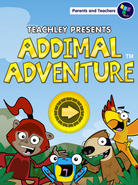
Developed by researchers at Columbia, Addimal Adventure gives kids more than drill: it uses a research-based understanding of how brains develop numeracy to teach addition. This app helps kids build a solid base for higher math skills, and the graphics and storyline are top-notch.

Motion Math - preschool - 6th grade
This wonderful suite of games is based on the neuroscience behind learning numbers and developing number sense. There's something here for everyone, from Hungry Guppy (matching digits and amounts) to Zoom (place value and decimals). Kids can practice fractions, math facts, and estimation skills with Motion Math's games. We love them because they cleverly pair conceptual learning with drill to promote learning. 

Invasion of the Moon Monkeys - any age learning multiplication
Practice your facts, and save the world while you're at it! Download this fun, challenging app and prepare to be addicted.

Mathmateer - any age learning multiplication
Another good one for math fact practice. In the game, correct answers will earn players "money" with which to buy new parts for digital rockets they're building. This website, made by the same company, provides practice worksheets and other resources.

For more great math games, jump to our Math page.
LANGUAGE ARTS
Reading Decoding
Picture
StarFall - grades K - 3
This site is divided into four levels. Level 1 is dedicated to learning letter sounds, Level 2 covers the process of sounding out words, and by Level 4, kids can choose from plays, Greek myths, comics, and other genres to practice their reading skills.

Montessori Crosswords - kindergarten & grade 1
Learners are shown a picture and asked to drag letters from the alphabet into boxes to spell the word in this high-quality app.  They can hear each sound by tapping on it, reinforcing phonics skills.

Learn With Homer - ages 2 - 6
The Homer Method infuses the best research on how children learn to read with high quality, engaging art and storytelling. This innovative app is free, though users may wish to supplement material with in-app purchases.

Auditory Processing Practice
Picture
Earobics - pre-kindergarten - grade 3
This multi-sensory software delivers systematic instruction to help students develop phonemic awareness. It also provides resources for helping children learn phonics, develop fluency, build vocabulary, and practice comprehension skills.

Headline Clues -  grades 6 - 12
This is a great reading comprehension game that changes daily with the news. Students read a piece of a news story, then have to fill in the blanks in the partially written headline above to introduce the article.

Rain Words - grades 4 - 12
In this game, players use spelling knowledge to create a correctly aligned crossword puzzle. It’s a great option for improving spelling, critical thinking, and patience.
Other Areas
Picture
Spelling City  - all ages
Kids will love using this fun site to practice their spelling skills and build vocabulary. Students, or their parents or teachers, can enter customized lists, then use the site's flashcards and games to practice. When students have had enough drilling, they can take a test to see how well they remember what they've learned. One nice feature is the ability to view anyone's list, so busy parents can find one that's appropriate for their child easily if there's no time to create one. Access Spelling City on the computer or download the app, where you can create a free account to access pre-loaded lists of spelling words, or enter your own list to play with.

Picture
LOGIC GAMES AND BRAIN TEASERS

Samorost - grade 3 and up
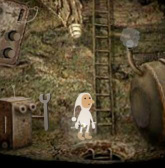
Players must help our hero Gnome navigate his way through a deliciously whimsical world to save his planet from an asteroid by solving a series of puzzles. Part of the puzzle, however, is figuring out what the puzzles are. Solved it? Check out Samorost 2, Machinarium, or some of Amanita Design’s other games. Although Samorost is free, some of Amanita’s other offerings require a fee.

Math.com - grades 3 and up
Play old favorites like Sudoku and Hi-Q, and less known gems like Hare and Hounds and TacTix.

Copy Cat - grades 3 and up
This is a wonderful game for building spatial skills. Players must use patterns on the faces of a spinning solid shape (like a cube) to replicate a picture.

The Set Game - grade 3 and up
In this challenging game, players must group images on digital cards together to form a set based on concepts like the shapes, number of shapes, and features of shapes. This is a great exercise for concept-building, and the website above provides a different challenge each day. Look for the original card game in toy stores, too!

Traffic Jam - grade 1 and up
This classic is now available online! Traffic Jam challenges players to plan several steps ahead as they work to free the red car from a traffic jam. It will take several well-planned moves to do it! This site shows the minimum number of moves required for solving the puzzle, so if kids figure it out in more moves than specified, ask them to try again with fewer moves. You can purchase the actual game from ThinkFun, too.

One Hundred Doors - (age depends; see below)
Available for iDevices and Android, this game is downright addictive. Players must figure out how to open the door in front of them using clues they see around them. The reward for opening a door? Another door, which is slightly harder open. Younger kids will be able to pass the first few levels easily but may become frustrated with the later levels, so it may be best to play with a parent or a friend. (Really stuck? Find videos explaining how to solve each level on YouTube by typing in the name of the game and the specific level.)

Links are provided for informational purposes only. Links do not indicate endorsement of any particular products or services. Some resources may not be appropriate for all learners. We urge you to carefully review any of the products, services, or tools linked to from these pages prior to allowing children to use them without adult supervision.


Wednesday, April 4, 2018

Educational Games

Our Yellin Center website is full of information on who we are, what we do, and how and why we do it. It is designed to let families and students know about our assessment process and what to expect while working with us. But it is also a terrific starting place for specific resources, such as educational games. 

Since our list of educational games is tucked away in a corner of our website, we thought it would be a good idea over the next few posts to shine a light on these resources. We hope you agree.

Picture
Free Rice
General Interest Education Games

Sheppard Software - preschool - grade 6
This site links to quizzes on lots of subjects, including geography, math, written conventions, science, and many more. Unlike other quiz sites, it features an instructional component, as well. Players may require an adult’s help to find appropriate games because there are so many options.

Gamequarium - grades 3 - 6
Find lots of great quizzes on language arts, math, science, and more.

Learning Games for Kids - grades 1- 6
Most of the quizzes on this site are fantastic, covering topics like language arts, math, and science. Also featured are several fun games to help students improve their typing speed and accuracy. Again, players may require an adult’s help to navigate through all the options to find appropriate games.

BBC Bitesize - grades 6 and up
Students can select quizzes on topics like English, science, and math. The graphics are fantastic, and the games, while quite challenging, are very engaging. Levels are designated using British terminology: Foundations is the most basic level, Intermediate is in the middle, and Higher is the most advanced option.

Free Rice - grades 3 and up
Originally only a vocabulary game, Free Rice now features multiple choice quizzes on many other topics such as literature, foreign language, math, and science. Players begin at a basic level, but as they answer questions correctly, the game gains in complexity.

Funbrain - grades 1 - 6
A collection of very appealing math and language games, plus opportunities to read favorite books online (like Diary of a Wimpy Kid) and to make Mad Libs! Note that while most of the site is very enriching, the “Playground” section, while entertaining, has little educational merit.

Arcademics - grades 1 - 6
Arcademics (arcade + academics) offers a number of fun games to help kids practice various math, reading, spelling skills. One of the best parts of this site is that many games offer chances for friendly competition by pitting players against others from around the web in real time. This design is motivating and discourages mindless clicking.

Links are provided for informational purposes only. Links do not indicate endorsement of any particular products or services. Some resources may not be appropriate for all learners. We urge you to carefully review any of the products, services, or tools linked to from these pages prior to allowing children to use them without adult supervision.


Monday, October 19, 2015

Halloween BINGO

Halloween is just around the corner, so we want to share a fun, easy game to play with the kids. It can be played at home in a small group, or at school with the whole class. BINGO is a classic game, and the rules are pretty straightforward. We have, however, included step-by-step instructions to help you brush up on the game play basics. The complete set of game cards can be downloaded, for free, here. There are five different game boards available. We hope you enjoy your Halloween!


Materials Needed

  • One bingo card per child
  • Materials to mark the bingo cards (e.g. candy, tokens or crayons)
  • One set of teacher/parent game pieces

Preparation
  • Print out enough game cards so that each player has one
  • Gather any markers, chips or candy needed to mark the squares
  • Teacher/parent cuts out their game pieces along the dotted line

Directions
  • Teacher/parent draws a card and calls it out to the students
  • It is helpful to show younger children the picture, in case they aren’t familiar with the Halloween words. In a classroom setting, a projector or smart board works well for this
  • Children look at their game card and locate the picture. They then cover the picture if they find it
  • First person to complete a row of five (horizontally, vertically or diagonally) wins!
  • Alternate way to win: Play blackout, where the entire board must be covered to win

Friday, July 10, 2015

Summer Skills Building: Phonics

Today's post continues our occasional summer series on fun ways to build academic skills during the summer.


It’s hard to blame kids when they groan at yet another phonics worksheet. Workbooks can be important skill builders, but they’re not the only way to reinforce phonics skills. Make it fun (especially in summer!), and kids will argue when it’s time to stop instead of when you ask them to start! One way to do this is with a nearly endlessly adaptable game we developed called Phonics Toss.

You can set this up to practice with lots of different phonics skills, but we’ll imagine you want your child to practice the long a sound for the sake of this explanation.

Materials:
  • several sheets of paper and a marker
  • something to toss that won’t roll, such as a poker chip, a coin, or a popsicle stick
  • a roll of masking tape (optional)
  • a list of words. You can also make up words as you play!
Set-Up
  • Isolate whichever sounds you want the player(s) to focus on. (See the end of this post for some more suggestions if you’re not sure where to start.) There are three primary ways to spell the long a sound in words, so write “ay,” “ai,” and “a_e” in large letters on separate sheets of paper. Lay them on the floor.
  • Optional: designate a line or make one with masking tape so no one gets too close to the letters when throwing.
  • If there are multiple players, ask them to decorate their marker somehow. They can draw on a popsicle stick, choose a sticker to place on a coin or poker chip, etc.
Play:

The adult should start each round by saying, “The 'a' sound in” and then saying a word with a long a sound such as “chain,” “state,” or “play.” Staying behind the line, players should toss their marker at the paper with the correct letters on it. Markers that land on the correct paper earn a point. The adult in charge can offer a reward if a certain number of points are reached, or eliminate scoring to play for fun.

Other Sounds and Letters to Practice (in order of difficulty):
  • Number of syllables (for this one, write numbers on the papers instead of letters)
  • Initial sound (e.g. words that start with f, g, or h)
  • Rhyming words (instead of writing letters, draw simple pictures on the papers like a cat, a man, and a sad face and call words that rhyme with “cat,” “man,” and “sad”)
  • Digraphs (e.g. /sh/, /th/, and /ch/)
  • Short vowel comparisons (e.g. short e versus short i)
  • Short vowels versus long vowels (e.g. short o versus long o)
  • All long vowel spellings (like our example above, but with e, i, o, and u)


Wednesday, April 22, 2015

Games and Conversations without Screens

Summer is fast-approaching, and for many families this means lots of waiting. Road trips and seemingly endless minutes waiting to sit down at a restaurant, board a plane, or see a doctor leads lots of parents to thrust iPads at squirming kids. Why not use conversation and games instead of technology to make the minutes pass? Here are a few of our favorite ideas:

  • Play 20 Questions – One person, the Chooser, should think of a person, place, or thing ("thing" includes animals, foods, etc.). The Chooser can tell the other players, the Guessers, what category they've chosen, or keep the category a secret for extra challenge. Then the Guessers take turns asking yes-or-no questions to try to guess what or who the Chooser is thinking of (e.g. "Is it furry?" "Can it fly?"). The Chooser keeps track of the number of questions asked, and they win if the Guessers ask twenty questions without figuring it out. And yes, guesses count as questions!
  • Tell Circle Stories – One person starts a story by saying a sentence, and each person adds their own sentence in turn. Decide in advance how many sentences each person should contribute, or simply let the story grow!
  • Compose Circle Poems – A Circle Poem starts like a Circle Story: One person says any sentence. But the next person must say a sentence whose last word rhymes with the last word of the first sentence (e.g. "Is this the right route?" "We need to find out." "Someone should go scout.") The one who starts the game should be careful to end with a word that has lots of rhyming possibilities. You could use a point-keeping system like in the basketball game Horse in which the first person who can't add a rhyming sentence gets a letter (and the first person who accumulates all the letters in Horse is "out"), or you could just play for fun.
  • Use Conversation Starters – Open-ended questions that encourage imagination and critical thinking can be lots of fun. Start a conversation with questions like, "If you could be any animal for a day, what would you be and why?", "Would it be worse to be eight feet tall or two feet tall?', and "If you could make one rule at your school that everyone had to follow, what would it be?" (This can be followed by questions about the downsides to the rules proposed or how a child might convince the principal to adopt the rule.) You could use the cards from You've Got to be Kidding, a would-you-rather board game available from toy stores, or simply make up your own.
  • Play Categories – For younger kids, take turns suggesting a category and then going around the circle listing as many things that fit into that category as possible (e.g., for sports: "soccer," "tennis," "baseball," etc.). Use a scoring system like the one from Horse (described above) or simply play for fun. For kids who can write easily, give them a minute or two to write as many items as they can in particular category, then ask them to read their lists aloud. They get a point for each item they listed that is unique, but if one of their items appears on someone else's list (for example, if two people wrote "Hawaii" when listing US States), neither player gets a point for that item. 

You'll be amazed at how fast time can fly without the aid of flickering screens. In fact, you may find your kids groaning instead of cheering at the end of a long drive!

Friday, April 10, 2015

Math App that Makes Practice Fun

We're big fans of the games from Motion Math, and have written before about their games for kids from 2 to 12, which include Hungry Guppy, Hungry Fish, Wings, and Zoom. Now, one of our favorite math game creators has done it again. Match, the latest addition to their stellar line-up of neurologically-based math games, is sure to please both kids and adults.In Match, tiles with either single digits (e.g. 7) or partial number sentences (e.g. 4+2) appear and players must tap the two that show the same quantity. Both correctness and speed will earn points, which go toward in-game prizes. As a student's number skills improve, the game gets more challenging. Match allows kids to practice addition, subtraction, multiplication, and division. It may be simple enough for a four-year-old to play, but Match provides enough challenge for students in upper elementary school, too.


We love Motion Math's games because they are based on research about the way the brain develops number sense, or numeracy, and Match is no exception. For example, mixed in with digit tiles are tiles with images on them showing a quantity of objects to continually reinforce the link between numerical symbols and actual quantities.

Match is presently available for the iPad for $2.99. Other Motion Math games are available for iPhones as well.

Wednesday, March 4, 2015

Exploring Real Life with Minecraft

If you spend any time around young people, you've likely heard plenty about Minecraft, the video game that kids can't seem to get enough of. Although too much screen time is to be avoided, many parents don't mind Minecraft because it rewards creativity and critical thinking. Ty Hollett, a doctoral candidate at Vanderbilt University's Peabody College, is working on a project that makes Minecraft even more virtuous. 


Hollett has created a "makerspace" called Studio NPL at the downtown Nashville Public Library. Using concepts from Minecraft, he is encouraging young people to re-envision a housing community in East Nashville. Hollett's clever program got us thinking about ways to take advantage of kids' obsession with Minecraft. We love the idea of using Minecraft to explore urban planning, but why stop there? Themes in the game can serve as a wonderful platform for introducing and exploring all kinds of other real-world topics. Creative teachers and parents will no doubt have plenty of their own ideas; here are a few of ours:

Cartography – In adventure mode, players can explore "maps" created by other players. Navigating around the map and exploring the virtual world is tremendous fun for young people. Kids will likely be more interested in drawing a map of their own Minecraft world than in looking at a map of Spain. Encourage them to draw lines of latitude and longitude and a compass rose to learn about coordinates and cardinal directions in a format that is personally meaningful to them. The geography of the real world will make much more sense in history class.

Architecture – Players are able to build anything they can imagine, so why not challenge them to re-create some famous structures? This is the perfect opportunity to discuss international landmarks. You can even get into physics by discussing how certain shapes, like the arch of the Sydney Harbour Bridge, lend themselves well to distributing force.

Internet Research – What better way to develop web literacy than purpose-driven inquiry? Minecraft doesn't come with instructions, so players have to figure things out in one of two ways: 1) trial and error, or 2) Internet research. The uninitiated would be stunned by the number of instructional videos and articles on the web. Because finding tricks to help them succeed feels relevant, kids will experiment with search terms until they become masters at navigating the wealth of information online. And many who resist reading a novel will pore through hundreds of words to glean information that feels critically important.

Geology --  As the name implies, mining is important in Minecraft. Players must create pickaxes, first out of wood--which is the only available material, initially--to mine minerals in order to build things. Some kids may be surprised to learn the realistic information about minerals and their properties that is built into Minecraft. Just as on Earth, the most common element in Minecraft is iron, and one can mine iron ore in order to smelt it and turn it into a stronger pickaxe. (Yes, Minecraft covers smelting.) It gets better: Pickaxes made of different materials behave the way they would in the real world. A gold pickaxe gives a player bragging rights but doesn't do a great job of mining hard minerals because it is too malleable. A diamond pickaxe, on the other hand, can mine even the toughest minerals, like obsidian.

Monday, February 23, 2015

Magic Squares Game for Developing Number Sense

Learning math can be stressful for some children, which is why we love games that can make the process enjoyable instead of daunting. Magic Squares, a great game shared with us by a creative veteran of the classroom, is too good not to share. There's a fair amount of set-up required, but if teachers laminate the board and cards, the game can last for years.

Magic Squares is excellent for children in first through third grades. To create the game, an adult should create a grid of 100 squares that is ten squares high by ten squares wide. This is the board. Each square should be numbered from 1 to 100.

Number cards are also needed. On squares of paper, the adult should write digits ranging from 1 to 100. There is no need to do this 100 times; ten or so cards with randomly selected numbers written on them should suffice*. The number cards should go into a bag.

Finally, the adult should make action cards, which will show operations. The operations can vary based on the age and skill of the players. For example, some cards could say "+10" or "+2" and others could say "-5" or "-3."**

To play the game, each player should draw five action cards; these can be kept secret or laid out on the table face-up. Then the adult should toss a penny onto the board. Whichever number it lands on is the starting point. Then the adult should draw a number card. For example, imagine that the penny landed on 32 and the adult drew a 20. The players must move the penny by using their operation cards. Each player gets the chance to play a card to get the penny closer to 20. The first student might play a "-10", for example, and move the penny to 22. The second student might play a "-1" to move the penny to 21. (Each time an action card is played, the player should discard it and draw a new card from the pile.) There is no winner in this game; since the students must work together to move the penny to the right number, they should all earn a small prize each time they succeed, such as a point toward a common prize, a single Skittle, etc.

The students we observed loved this game so much they actually groaned when it was time to go home for the day! We hope you enjoy it as much as they did.


*For beginners, multiples of 10 (e.g. 30, 70) are probably best.


** For beginners, operations should be limited to +5, +10, -5, and -10.

Wednesday, January 28, 2015

Students' Mother Tongue May Give Them Edge in Math

Students from countries like China and Japan have a reputation for excelling in math, and an article from The Wall Street Journal suggests that the languages they speak may have something to do with their success. Learning to count and developing a number sense in English, according to studies, makes those skills more difficult to master than learning such skills in languages like Chinese, Japanese, or Turkish.

The basis for this difference is that some languages make place value and number structure easier to understand than others, according to the article. For example, in Chinese, the number after ten, directly translated is "ten-one" compared with the rather muddy English "eleven." This structure makes it easy for Chinese youngsters to understand the place values of each digit in 11.

This finding doesn't mean that parents must sign their little ones up for Japanese lessons to succeed in math, however. There are lots of ways to develop the kind of number sense kids need to succeed in school. One of our favorites, counting on, is a simple, powerful strategy recommended by numerous experts in math education. To count on, an adult can draw a series of connected squares, like the ones in most board games, on paper or simply incorporates the strategy into an existing board game. Each square should be numbered sequentially. (To preserve your edition of Candy Land or Chutes and Ladders, use removable sticky notes to number the squares.) Each player should roll the dice as usual on his/her turn, then count the spaces as they move their marker ahead. But instead of counting from one, they should count from the number they began on. So, for example, if a child's game piece is on the 14 square and she rolls a 4 on her next turn, she should count "15, 16, 17, 18."


Math proficiency is practically child's play!


photo credit: amboo who? via flickr cc

Thursday, November 20, 2014

Quadrilateral Find Five: A Geometry Game

Quadrilateral Find Five
Quadrilateral Find Five is a game I developed for my geometry unit as part of my math curriculum. Identifying shapes and being able to connect the terminology with the visual representation are important skills that students must master. Furthermore, using games to teach math has long been a standard teaching strategy. Mathematical game play has been shown to support learners who struggle with motivation, promote positive attitudes toward math, and improve overall learning of mathematical concepts (Davies, 1995).

Description of Game

Quadrilateral Find Five provides a fun, engaging way for students to practice geometric naming and identification. Furthermore, providing students with opportunities to learn and hone their game play skills is also important to their overall development. Therefore, having students engage in a game-like activity will also reinforce the social learning of turn taking, sportsmanship, strategic play and peer collaboration.

In my own classroom, I have used Quadrilateral Find Five as an independent, stand-alone lesson, as an "early finisher" activity, and as one option in a math game day lesson. I found that my students really enjoyed this activity. As such, I wanted to have permanent game boards available to my students, as well as to be able to eliminate the time spent cutting out the game pieces from subsequent lessons. Therefore, after the first time I played this activity in a new class I would hand out one large zip top freezer bag, and two small sandwich size zip top bags to each pair. I would then ask each player to put their shape word pieces into one of the small bags and place the game board and the bag of shape word pieces in the large bag. This allowed me to easily store the activity for next time.

Materials Needed
  • One playing board per every two students
  • One set of word pieces for each student. These should be printed on different colored paper or in different ink colors to differentiate each player's word pieces 
  • Scissors 
Instructions
  • Pair students with a partner and distribute materials. 
  • Have the students cut out their own word pieces and have each student place their word cards in their own pile directly in front of them. 
  • Explain the rules of the game and highlight the text at the top of the game board where the students can refer to the rules in case they forget. 
Rules
  • Each partner will take a turn pick up a word card from their own pile 
  • They will read their shape word, and locate a shape on the game board the corresponds with their word and place their game piece on it 
  • If a student inaccurately identifies a shape, they have to pick up their incorrectly placed word card and miss their turn 
  • The first student to find five consecutive shapes wins 
  • Allow the students’ time to play the game. If time is left, have the students find a new partner and play again. 
How this game aligns with Common Core Standards: 
  • CCSS.MATH.CONTENT.2.G.A.1 Recognize and draw shapes having specified attributes, such as a given number of angles or a given number of equal faces.1 Identify triangles, quadrilaterals, pentagons, hexagons, and cubes. 
  • CCSS.MATH.CONTENT.3.G.A.1 Understand that shapes in different categories (e.g., rhombuses, rectangles, and others) may share attributes (e.g., having four sides), and that the shared attributes can define a larger category (e.g., quadrilaterals). Recognize rhombuses, rectangles, and squares as examples of quadrilaterals, and draw examples of quadrilaterals that do not belong to any of these subcategories. 
References

Davies, B. (1995). "The role of games in mathematics" Square One. Vol.5. No. 2

Game Board
You will need one board for each set of two players

Download a copy here: http://www.filedropper.com/findfivemathgame


Wednesday, November 5, 2014

Blends Bingo Game: Practicing Letter-Sound Connections

Description of Game
Blends Bingo provides a fun, play-based way for students practice their letter-sound connections. Letter-sound relationships are critical to the development of a child’s early reading skills. Mastery of this fundamental phonological awareness skill has been linked to overall success in reading decoding and comprehension (National Reading Panel, 2000). A good analysis of the importance of developing a child’s phonemic awareness can be found in a research paper from Scholastic, titled Building Phonemic Awareness and Alphabet Recognition through Purposeful Play.

Blends Bingo was originally developed for special educators or reading specialists to use in small group settings. However, it can be easily adapted for a whole class setting. It is important to note that every sound is on every card. Therefore, you should expect to have multiple winners at a given time. The reason every sound appears on every card is that this is a purposeful play activity, which is an evidence based practice for improving literacy learning (Clawson, 2002). Purposeful play is a learning framework that offers activities with structured learning objectives, while prompting children to interact and play with the material. As such, Blends Bingo has the objective of each student participating by locating a new sound every time a new playing piece is drawn by the teacher. There is no waiting in this activity, and every child is able to continually work to manipulate sounds.

Blends Bingo also has merits in terms of formative assessment. Since the teacher should observe every student locating a sound every time a new card is drawn, they will be able to easily identify the students who cannot match the sound to the letters. This gives you valuable insight into which students are struggling and what sound blends are posing the most difficulty. In addition, this game can be paced by the educator, so if you observe a student missing certain sound blends the teacher could take the time to write down the student’s name and the blends that are proving challenging. This will serve as great informal assessment data, which can help teachers target which word families or sounds to work on with a given child.

Sample Game Board
Materials Needed 
  • One game board handout per student 
  • Crayons, markers or bingo chip (for the students to mark their sounds when they are called) 
  • One set of teacher game pieces
Instructions
  • Create your teacher game pieces by cutting out the different sounds on the student handout 
  • Put teacher game pieces in box or bag 
  • Hand out one game board to each student 
  • Ask students to pull out a crayon or marker to use to color in their square when the sound is called 
  • Explain the rules of the game 
Rules
  • The teacher will pull a game piece from the box or bag, call out a sound, and repeat it slowly three times. 
  • Each student must locate the sound on their game board and color in the corresponding square 
  • First person to fill in an entire row wins 
  • Explain that the pictures are there to help as prompts since each picture represents a word that goes with that sound. 
Additional Game Variations: 
  • Have your students play “blackout” where they have to fill the entire card 
  • Have your students play “framing” where they have to fill in all the outer rows 
  • Give your students an entire word using a specific sound and see if they can locate it; avoid using the same word as the picture to ensure students are hearing the sounds and not relying on picture cues 
How this game aligns with Common Core Standards:
References

Clawson, M. (2002). "Play of language: Minority children in an early childhood setting". In J. L. Roopnarine (Ed.), Conceptual, social-cognitive, and contextual issues in the fields of play (Vol. 4, pp. 93-116). Westport, CT: Ablex.

National Reading Panel-NRP. (2000).Report of the National Reading Panel: Teaching Children to Read: An Evidence-Based Assessment of the Scientific Research Literature on Reading and its Implication for Reading Instruction. Reports of the subgroups. Washington, DC: National Institute of Child Health and Human Development


Friday, October 24, 2014

Noggle: A Math Fact Game

Today's post continues our occasional series about classroom games and tools developed by Yellin Center Learning Specialist Renee Jordan during her years as a classroom teacher. 

Grades: 
 2 through 8

Curricular Area: Mathematics 

Description of Game:
Mastery of math facts is a vital component of math education. Math facts are the building blocks of all other higher level math operations. Therefore, it is important that students have abundant opportunities to practice their math facts. Noggle is an enjoyable math game for students that can be used as an alternative to fact drills and traditional worksheets.

Noggle is customizable across grade levels, since the numbers can be changed to reflect the abilities of the students in your classroom. Be sure when you are picking numbers to fill in your grid that you are able locate multiple math facts. Another way to adapt this game is by the types of equations you ask your students to search for (e.g. addition, subtraction, division or multiplication).

In my classroom, I have used Noggle as an early finisher activity, a morning puzzle, or as one option in a math game lesson. I found that I was using Noggle so often as a start to the day puzzle or early finisher activity that I taped out a grid using painter's tape on a spare whiteboard mounted in my classroom. This also encouraged my students to create their own number grids on our classroom Noggle board that their peers could try and solve. Alternatively, a teaching colleague used open space on one of her bulletin boards to devise her own permanent Noggle board.

This is the Noggle Board I used with my students, but you can create your own.


Materials Needed:
One handout per student

Instructions:

1. Draw a game grid on the board

2. Fill in the game board with numbers of your choosing

Tips: 
i. Be sure to check your numbers and see that you can find a several equations that your students would be able to locate and solve independently

ii. Example of completed grid with addition, subtraction and multiplication equations

3
4
9
5
6
2
8
4
9
6
1
7
3
4
7
6

iii   Example answers from the aforementioned grid using the numeral 3 in the top left hand corner (in the shaded cell): 3 +4 = 9; 4+3=9; 9-4=3; 3+6=9; 6+3=9; 9-6=3; 3+2+1=6; 3+4+2=9 3x2=6

3.  Explain the rules of the game to your students and designate the types of equations you would like them to find (e.g. addition, subtraction, division or multiplication). 

Tips        
 i.      I often reference the game Boggle and explain that it is a similar structure but with numbers instead of letters, and that you are finding equations instead of words.
 ii.      For the younger grades I will only select addition or subtraction;  for older grades I will challenge students to find the additional equation types.
iii. I always encourage my students to find equations with more than two numbers (e.g. 1+3+4= 8) 
iv. I always encourage my students to use the communicative property (e.g. a+b=c and b+a=c)
                                                     
4.  Highlight the text at the top of the game board where the students can refer to the goal and game rules in case they forget

5. Allow the students time to play the game.

Alignment with Common Core Standards:
  • CCSS.MATH.CONTENT.3.OA.C.7: Fluently multiply and divide within 100, using strategies such as the relationship between multiplication and division (e.g., knowing that 8 × 5 = 40, one knows 40 ÷ 5 = 8) or properties of operations. By the end of Grade 3, know from memory all products of two one-digit numbers.

Friday, October 10, 2014

Resources for Teachers: Sight Word Recognition Game

With this week's posts on The Yellin Center Blog, we welcome a new blogger to our Yellin Center team - Learning Specialist Renée Jordan, M.A. Ms. Jordan's blogs will include tools and techniques for teachers and parents that she developed as a classroom teacher, as well as reviews of apps, books, and other resources.

On a Roll
On a Roll is a game I developed as part of the language arts curriculum for my students in kindergarten and first grade. Sight words are a small group of words (approximately 300-500) that account for large portions of the common texts we read. For example, words such as: this, that, then, he, she, and etc are considered sight words. Due to their high frequency, it is critical that students cultivating early literacy skills develop their sight word recognition skills. 

Description of Game

On a Roll provides a fun, engaging way for students practice their sight word recognition. The game is fully customizable, thus allowing educators to alter the grid to include sight words that are specific to your students’ needs. Furthermore, peer collaboration is a great strategy for reinforcing learning. Therefore, having students work in pairs and use their peers as support when identifying sight words that challenge them will also be beneficial.

In my own classroom, I have used On a Roll as an independent, stand alone lesson, as an "early finisher" activity, and as one activity in my literacy centers. Furthermore, I found that my students really enjoyed and benefited from the activity and wanted to make permanent game boards for my classroom. As a result, I made multiple game boards with all the sight words I wanted my students to master by the end of the year and laminated them. My students were then able to use dry erase markers on the game boards, which were easily cleaned at the end of each lesson. 

Materials Needed
  • One handout per every two students. You can download the handouts here (for page 1) and here (page 2), or create your own.
  • 1 die per two students
Instructions
  • Pair students with a partner and distribute materials.
  • Explain the rules of the game and highlight the text at the bottom of the game board where the students can refer to the rules in case they forget.
Rules
  • Each partner will take a turn rolling the die
  • They will then find the sight word that corresponds with the number rolled
  • Then the student will locate the sight word on the game board and color it in
  • The first student to color in an entire row is the winner

Allow the students time to play the game. If time is left, have the students find a new partner and play again. Alternately, you could make multiple game boards with a variety of sight words your students need to master. Therefore, when they have completed a round of play they could attempt a new word list.


How this game aligns with Common Core Standards:

Wednesday, June 4, 2014

Get a Sense of Your Number Sense with Panamath

Research suggests that students’ achievement in math class may be related to their innate number sense, and it’s no wonder. Number sense, the intuitive recognition of numbers and numerical relationships, is something that animals—including humans!—throughout the world are born with. Panamath, whose name comes in part from the acronym for the Psychological Assessment of Numerical Ability, is an organization hoping to understand the relationship between in-born number sense and math achievement. Through a grant from the National Science foundation, they’re investigating number sense. And if you’re curious about how yours stacks up, their online test is an interesting (and free) resource.

The test is simple enough for even a young child to take: A series of colored dots flashes across the screen and test-takers must decide whether they saw more blue or yellow ones. Both accuracy and decision speed are measured. When the test is over, one can view one’s results compared with other same-age testers. Individuals may wish to take the test out of curiosity, but teachers and clinicians can download it in order to save students’ results. As more is learned about the relationship between number sense and math instruction, gauging a student’s innate skills could be very useful for shaping lessons.


Results not as high as you’d hoped? Never fear! Number sense, like just about every human ability, can be improved. Here are a few ideas for helping kids sharpen their number sense:

Represent Numbers with Different Objects

Pick a number, starting with a small number like five for very young kids. Ask your child to collect different objects and put them in groups that contain that number. (For example, your child might find five rubber bands, five grains of rice, five cotton swabs, etc.) Write the number on a several paper plates and load them with the objects. Point out that groups of ten marbles, ten pieces of puffed rice cereal, ten large crackers, and ten toy cars may take up different amounts of space, but they still contain the same number of objects. Leave the display out for a few days to help your child create an association between the number symbol and the number of items in the group, then try again with a different number.

Comparison Game

Play a guessing game in which you compare groups of different-sized objects with your child. For example, ask your child to cover her eyes and lay out four wooden blocks and seven beads. Then ask your child to look quickly at both groups and point to the one that has more. Next, count the groups to see if she was right. Make the game more challenging by laying out more objects and objects that are closer in size.

Practicing Estimation

There are infinite ways to do this with children. At the grocery store, ask your child to decide which line has the fewest people in it, then count the people in your line and other lines while you wait for the cashier to determine whether your child’s guess was right. Enjoying a treat of candy? Ask kids to guess how many pieces of each color they see or how many pieces there are altogether. Make the estimation games trickier by introducing proportions: Is your child’s little sister half as tall as he is? A third of the height of her father? Measure everyone to see. Is the area of the living room twice the area of your child’s bedroom? More? Less?

Motion Math Games

Evidence suggests that the digital games developed by Motion Math may help kids improve their number sense. The easiest of the games is appropriate for three- or four-year-olds, while other offerings will challenge and entertain kids through early middle school.

How Much is a Million? by David M. Schwartz

This outstanding picture book was made to help children understand large numbers, which can be difficult to conceptualize. No time to get to the library? The book is (of course) available as a charming video  on YouTube.

For even more ideas, investigate the “Number Sense and Place Value” series by NRICH, which contains a wealth of activities for helping very young and elementary-aged children to improve their number sense


This post contains our own ideas as well as inspiration from Panamath (www.panamath.org) and the National Council of Teachers of Mathematics.


Wednesday, May 7, 2014

Use of "Touch Screen Devices" by Toddlers

The  American Academy of Pediatrics (AAP) has long cautioned parents to limit media exposure of young children and updated their recommendations as recently as 2013.

A new study on this subject from a team led by Dr. Ruth Milanaik, an attending developmental and behavioral physician at the Cohen Children’s Medical Center of New York on Long Island, New York, looked at the very youngest children -- infants and toddlers up to age three -- to examine what the researchers called "touchscreen device usage" or TDU, to see how use of or exposure to such devices as smart phones and iPads impacts children's development.

Dr. Milanaik noted that the study was prompted, in part, by the observation that the "number one toy" that parents gave their children to play with at a newborn follow-up clinic was a smartphone. In an article on the study in Forbes, she noted that parents were substituting smart phones for books and other baby toys and stated, "Many parents did not seem to bring any other distraction for their children except the touch screen devices.”

The study found that the majority of parents questioned believed that TDU had educational benefits. However, developmental scores showed no significant difference between children who had access to such devices and those who did not. Furthermore, children who played non-educational games (such as Angry Birds or Fruit Ninja) on touchscreen devices had lower receptive & expressive language scores compared to children who engaged in other types of TDU. The authors caution that it is possible that children with slower language development may prefer playing non-educational games and that it would be inappropriate to conclude that lower scores in language were caused by TDU.

Dr. Paul Yellin commented,  "Dr. Millanaik’s quote may get to the heart of the matter. It may not be the devices per se, but rather the fact that they are used instead of reading or speaking to children. This is consistent with recent research demonstrating the importance of exposure to language in the early years."


Monday, December 16, 2013

Math Games

For your gaming pleasure, here’s our latest list of recommended math games! All of the games below are web-based, so no downloading is necessary, though you will need an internet connection. Have fun!

Cool Math Games  - grades 2 - 7

Students can practice addition, subtraction, multiplication, division, and work with negative numbers and decimals, with this huge selection of games. One we particularly enjoyed, Crazy Taxi, let us drive a cab into cars that had specific multiples on them while avoiding cars that didn’t fit the pattern.

Caution: Parents, be aware that this site is host to plenty of games that have little to no educational value, too. Keep an eye on screens to be sure kids choose games that have merit, or make a list of games your child is allowed to play before turning them loose.


Funbrain  – grades 1 - 8

The math arcade is the best part of this large site. Students will start on the first square of this digital “gameboard” and progress forward as they pass challenges. (The game will save kids’ place if playing is interrupted.) This format gives students less control over which games they play, but provides great incentive to keep trying. The challenges are refreshingly inventive.

Caution: Same as above. Monitor screens to be sure kids don’t stray into playing other games that are simply for fun.


Decimal Squares  – any student struggling with decimals

This site links to eight very high quality games all about decimals. Decimal Squares gives kids a fun way to work on traditionally tricky concepts like place value and estimation through fun games like blackjack and darts. There are also some two-player games here, which provide motivation and discourage mindless clicking.

Subtangent  -3rd grade and up

There are quite a few fun, unusual math games to choose from on this site. We found Broken Calculator to be especially enjoyable. The player is shown a calculator with missing keys and challenged to make certain numbers using only the few number and sign keys left. We also liked Matching Game which challenges students play a version of memory by turning over digital cards to look for matches like equivalent fractions, multiplication facts and their answers, shapes and their names, etc.

Remember, you can always visit our Resources page for links to our favorite games and resources for math, reading, writing, studying, and more!