Like that awful song your teenager has been playing on repeat all summer, the mindfulness trend is hot right now. Unlike that song, however, mindfulness is a trend we hope will stick around. Mindfulness can help improve attention and emotional resilience by simply encouraging people to be aware of what is happening around and inside them. Often it has been linked to meditation or yoga, but mindfulness can be taught in the context of everyday activities, too. Results of research exploring the effects of mindfulness suggests that it’s a very promising technique; children who learn mindfulness are able to sustain attention longer, resist impulses, self-soothe, and effectively control anxiety. In fact, in a recent blog post, we noted research that found that using mindfulness techniques has proven effective to reduce stress and depression and to improve parenting skills in parents of children with developmental disabilities.
For parents who think their children could benefit from mindfulness, Sitting Still Like a Frog by Eline Snel is an excellent resource. Snel, founder of the Academy for Mindful Teaching in the Netherlands, has worked to develop meditation and mindfulness training programs for more than twenty-five years. Her book is a user-friendly and effective tool that helps families use mindfulness and reap its benefits. The exercises in it are basic enough for children as young as five but nuanced enough to use with kids into their middle school years.
The book contains exercises for families to try together and explanatory passages aimed at adults that parents will find insightful and intriguing. In addition to the text, the book comes with an audio CD that leads listeners through more activities that promote calm and focus. Those suspicious that the book will smack of strange, new-age ideas will be pleasantly surprised by its down-to-earth tone and common-sense advice. To give you a sense of the program, here’s a short excerpt from the first track on the audio CD:
“A frog sits very still but is always aware of what is going on around it. It jumps, stops, and sits really still, being aware of everything around it. It only moves when it really has to, like when it’s hungry. It doesn’t waste energy doing things it doesn’t have to do. It’s aware of all the commotion going on around it, but it doesn’t react.”
Cultivating this awareness is a big part of Snel’s mindfulness training. In addition to learning to be attentive to their surroundings, kids are encouraged to turn the lens inward to find out what they’re thinking, feeling, and doing with their minds and bodies. Many children have difficulty understanding the escalation of their own impulses or feelings and aren’t sure how to control them, so providing kids with tools for this purpose can be enormously comforting. Parents can give staying power to the book’s worthy lessons by helping kids remember to use what they’ve learned when they’re presented with challenging situations.
Mindfulness can be very beneficial to children with attention difficulties and anxiety. But it can also help frazzled adults manage stress and feel more balanced. So, by sharing the lessons from Sitting Still Like a Frog with your kids, you may be doing yourself a favor, too.
Official Blog of The Yellin Center for Mind, Brain, and Education
Showing posts sorted by relevance for query mindfulness. Sort by date Show all posts
Wednesday, July 30, 2014
Friday, March 4, 2016
Teaching Children Mindfulness
There are several thoughtful, structured approaches to help develop a child’s awareness of the world around them and grow their emotional intelligence. Taking part in activities that promote mind-body awareness, such as martial arts, yoga, or dance, can be valuable for students who struggle to regulate their impulses. Mindfulness exercises are another great way for children to improve their ability to sustain focus, regulate their emotional responses, and make better decisions.
Some of our favorite resources are:
I am Yoga by Susan Verde and Peter H. Reynolds
We have written in previous blogs about children’s author and illustrator Peter H. Reynolds. This time he has teamed up with certified yoga instructor Susan Verde to create a book that encourages children to explore the relaxing world of yoga. The intention of the book is to foster creativity and self-expression in young people in a playful, engaging manner. The narration of the book encourages students to get moving as they are read to, and the back of the book houses a detailed explanation of all 16 poses they will be guided through.
A Handful of Quiet: Happiness in Four Pebbles by Thich Nhat Hanh and Wietske Vriezen
Mr. Thich Nhat Hanh and Ms. Wietske Vriezen bring forth another exceptional resource for developing mindfulness in children. Planting Seeds offers concrete activities and a detailed curriculum for parents and teachers to help children improve communication, grow confidence, and deal with difficult emotions. Techniques in the book and the accompanying CD include deep relaxation, conflict resolution, ethical guidelines for children, and mindful breathing.
I wonder… by Annaka Harris and John Rowe
I Wonder... is a beautifully illustrated picture book written for children age one and above. The story follows a little girl as she confronts several questions about the world around her. Through the process she learns that it is okay to not know all the answers but rather that curiosity and awareness of the world is what matters. The story offers lessons in emotional intelligence and aims to build children’s confidence in themselves.
What Does It Mean to be Present? By Rana DiOrio and Eliza Wheeler
The award winning children’s book What Does it Mean to be Present? encourages students to be mindful by equipping them with practical ways to be present. It teaches students how to listen to themselves and others, as well has how to slow down and focus on what is going on in the world around them. This book is one of several in the What Does It Mean To Be …? series. So if you like this story, you may also enjoy author Rana DiOrio's books on developing kindness or a global mindset.
Wednesday, August 9, 2017
Considering Emotions in the Classroom
It’s been almost 100 years since Pavlov, one of the earliest behavioral psychologists, set the precedent of linking learning with positive emotions. We learn better when we’re engaged and feeling good. It’s only in the last decade or two, however, that schools have started to take emotions seriously by implementing school-wide programs. There’s no shortage of research out there reminding us that unhappy kids are going to have a lot of trouble learning, but newer research has started focusing on positive emotions as well. Here at The Yellin Center, we see a lot of students who are feeling down or frustrated, often because they haven’t gotten the academic support they need in order to feel successful. Thankfully, lots of researchers have begun looking at how we can help students experience more positive emotions and, more importantly, learn how to identify, accept, and respond to the emotions they feel.
From kindergarten to college, we see a relationship between emotions or mood and grades or achievement. We also know that students with lower moods perceive themselves as less competent. It would be impossible to run a study looking at the directionality of these relationships, but it’s clear that negative moods, lower achievement, and feelings of incompetence are linked, regardless of what causes what. Parents and teachers want students to feel good about their work and to be engaged in the learning process. Feeling anxious, sad, or angry can get in the way of academic engagement. According to one theory, the “Broaden and Build Model” (Fredrickson, 2001), positive emotions broaden our mind, allow us to explore more of our environment and make us more aware of what’s going on. Negative emotions, on the other hand, have a narrowing effect; we are more likely to become fixated on a certain aspect of our environment and miss out on other details. Positive emotions might also increase our consciousness of potential solutions to problems – cognitive flexibility and strategy use, in other words. Way back in the early 1900’s, developmental psychologists already knew that feelings of joy lead to children’s desire to play and be creative – two very important mechanisms in the learning process, especially during early childhood (Vygotsky, 1978).
A second intervention steadily gaining popularity is mindfulness meditation. According to Jon Kabat-Zinn, one of the founding figures in the field, mindfulness is focused on learning how to be with your thoughts and feelings in a non-judgmental way and to selectively attend to them. It can help students recognize their emotions and learn how to cope with them effectively in order to make space for positivity and calm. Research looking into the effects of mindfulness meditation in the classroom has found increased self-regulation, attentional control, and prosocial behavior (Schonert-Reichl et al., 2010).
We’re excited to see over the next few years what research comes out about school-based interventions that take the whole child into account – that is, academics that also focus on helping students feel positively empowered to engage in learning by giving them the tools to not just solve math problems but also manage the wave of emotions within each of us. In the meantime, feel free to check out the resources listed below and talk to your child’s school about how your child is learning to be emotionally empowered.
Fredrickson, B. L. (2001). The role of positive emotions in positive psychology: The broaden-and-build theory of positive emotions. American Psychologist, 56(3), 218-226.
Schonert-Reichl, K. A., & Lawlor, M. S. (2010). The effects of a mindfulness-based education program on pre-and early adolescents’ well-being and social and emotional competence. Mindfulness, 1(3), 137-151.
Resources and Further Reading
Kabat-Zinn, J. (2005). Wherever you go, there you are (10th ed.). New York, NY: Hachette.
Snel, E. (2013). Sitting still like a frog. Boston, MA: Shambhala Publications.
Blog: Why Social and Emotional Learning Is Essential for Students
From kindergarten to college, we see a relationship between emotions or mood and grades or achievement. We also know that students with lower moods perceive themselves as less competent. It would be impossible to run a study looking at the directionality of these relationships, but it’s clear that negative moods, lower achievement, and feelings of incompetence are linked, regardless of what causes what. Parents and teachers want students to feel good about their work and to be engaged in the learning process. Feeling anxious, sad, or angry can get in the way of academic engagement. According to one theory, the “Broaden and Build Model” (Fredrickson, 2001), positive emotions broaden our mind, allow us to explore more of our environment and make us more aware of what’s going on. Negative emotions, on the other hand, have a narrowing effect; we are more likely to become fixated on a certain aspect of our environment and miss out on other details. Positive emotions might also increase our consciousness of potential solutions to problems – cognitive flexibility and strategy use, in other words. Way back in the early 1900’s, developmental psychologists already knew that feelings of joy lead to children’s desire to play and be creative – two very important mechanisms in the learning process, especially during early childhood (Vygotsky, 1978).
In our work, we know that before any academic interventions or strategies can be put in place, we need to focus on helping students feel their best so they’re ready to tackle whatever difficult learning comes their way. We’re especially happy to see researchers turning away from exploring negative emotions and towards testing out different school-based socioemotional interventions that can increase positive emotions, emotional regulation, and engagement. Two programs that have been gaining traction are socioemotional learning programs and mindfulness meditation. Socioemotional learning programs help students develop their emotional intelligence through a programmed sequence of lessons on self-awareness, self-management, social awareness, relationship skills, and responsible decision-making. There are a number of commercially available curriculums that schools have the option of buying as packages, but lots of teachers are implementing socioemotional learning into their classrooms on their own, as well. One of the most important lessons for students is learning how to identify their feelings, respond to them appropriately, and develop a toolbox of coping strategies for moving to a more positive state, if necessary. This is an important set of skills to start working on before children even step foot in a classroom; it helps young learners face challenges, conflicts, and failures appropriately. Parents and caregivers can start introducing children to a robust emotional vocabulary and coping toolbox as soon as a baby starts to attend to the people around her or him.
A second intervention steadily gaining popularity is mindfulness meditation. According to Jon Kabat-Zinn, one of the founding figures in the field, mindfulness is focused on learning how to be with your thoughts and feelings in a non-judgmental way and to selectively attend to them. It can help students recognize their emotions and learn how to cope with them effectively in order to make space for positivity and calm. Research looking into the effects of mindfulness meditation in the classroom has found increased self-regulation, attentional control, and prosocial behavior (Schonert-Reichl et al., 2010).
We’re excited to see over the next few years what research comes out about school-based interventions that take the whole child into account – that is, academics that also focus on helping students feel positively empowered to engage in learning by giving them the tools to not just solve math problems but also manage the wave of emotions within each of us. In the meantime, feel free to check out the resources listed below and talk to your child’s school about how your child is learning to be emotionally empowered.
References
Schonert-Reichl, K. A., & Lawlor, M. S. (2010). The effects of a mindfulness-based education program on pre-and early adolescents’ well-being and social and emotional competence. Mindfulness, 1(3), 137-151.
Resources and Further Reading
Kabat-Zinn, J. (2005). Wherever you go, there you are (10th ed.). New York, NY: Hachette.
Snel, E. (2013). Sitting still like a frog. Boston, MA: Shambhala Publications.
Blog: Why Social and Emotional Learning Is Essential for Students
The Atlantic: The Psychological Approach to Educating Kids
Friday, April 15, 2016
Strategies for Promoting Self-Regulation in Children
We recently wrote about promoting mindfulness in children, which received a great deal of response and thanks from parents and teachers who were trying to address social and emotional learning with their children. They noted, however, that it has been hard for them to find tangible, effective ways to teach children skills like mindfulness and self-regulation. In response to their comments, we are going to dig a little deeper into self-regulation – the processes we use to calm ourselves down when feeling upset, angry, or overwhelmed or cheer ourselves up when feeling dejected or sad.
Social-Emotional Development and the Brain
Often, as parents or teachers, we think that children will be able to develop regulatory skills on their own. This is correct to some extent, as children do begin to develop self-soothing and self-regulatory abilities in infancy, and they continue to develop these over time. However, it can be hard for children to learn how to work through big, overwhelming feelings in a thoughtful, proactive manner. They often need to be explicitly be taught strategies for regulating their emotions and responses.
For more information, Dr. Shonkoff, Director, Center on the Developing Child, Harvard University gives a wonderful three-minute overview of the relationship between brain development, cognition, and emotional regulation in his video Brain Builders.
Gross Motor Actives that Promote Self-Regulation
At The Yellin Center, we often recommend that students who are struggling with self-regulation or impulse control participate in gross motor actives that promote mind-body awareness. Examples of such activities are martial arts, ballet or yoga. A research study done by the University of Wisconsin-Madison supports this notion. Researchers looked at using a school based Tae Kwon Do training program to develop self-regulatory skills in students in kindergarten through fifth grade. They found that at the end of their three-month intervention the students in the martial arts program demonstrated greater improvements in “cognitive self-regulation, effective self-regulation, prosocial behavior, classroom conduct, and performance on a mental math test (Lakes & Hoyt, 2004).
Yoga is another activity that can help promote self-regulation in children. The children’s yoga and mindfulness program, Move with ME ™, provides video yoga classes to teach health and self-regulation skills to children through stories and pretend play. As children go through each video they will have fun pretending to be everything from a lion to a rocket ship. Beyond their yoga videos, Move with Me, also offers trainings, informative self-regulation activities, and other mindfulness curriculum materials. Best of all, Move with Me is constantly staying current on the latest research in social-emotional development in children and sharing that with their users.
Mind Up Curriculum
Scholastic has a curriculum called Mind Up that helps children “focus their attention, improve their self-regulation skills, build resilience to stress, and develop a positive mind-set in both school and life.” The lessons and curriculum are broken up by age group, and provide resources for children in grades kindergarten through eighth grade.
What we like best about the Mind Up curriculum is that it was created by neuroscientists, behavioral psychologists, and educators who use the notion that knowing one’s own brain can empower students to learn complex skills and overcome challenges. When developing their instructional strategies they integrate the latest neuroscience research on how our brain works and how it impacts learning. Here at The Yellin Center, that is exactly what we do and believe in. By knowing how their brain works, and what parts of their brain control their actions, feelings, and learning, students are often better able to overcome their challenges. If you head over to the Scholastic Website you can download a sample lesson plan and excerpt from the program to determine if the materials would meet your needs.
References
Lakes, K. D., & Hoyt, W. T. (2004). Promoting self-regulation through school-based martial arts training. Applied Developmental Psychology, 25, 238-302.
Often, as parents or teachers, we think that children will be able to develop regulatory skills on their own. This is correct to some extent, as children do begin to develop self-soothing and self-regulatory abilities in infancy, and they continue to develop these over time. However, it can be hard for children to learn how to work through big, overwhelming feelings in a thoughtful, proactive manner. They often need to be explicitly be taught strategies for regulating their emotions and responses.
For more information, Dr. Shonkoff, Director, Center on the Developing Child, Harvard University gives a wonderful three-minute overview of the relationship between brain development, cognition, and emotional regulation in his video Brain Builders.
However, the salient question for many teachers and parents is how to translate all the information they know about the importance of fostering a child’s social-emotional development into fun and effective learning experiences. Luckily, we are here to help, and have outlined a few of our favorite resources and ideas for you below.
Gross Motor Actives that Promote Self-Regulation
At The Yellin Center, we often recommend that students who are struggling with self-regulation or impulse control participate in gross motor actives that promote mind-body awareness. Examples of such activities are martial arts, ballet or yoga. A research study done by the University of Wisconsin-Madison supports this notion. Researchers looked at using a school based Tae Kwon Do training program to develop self-regulatory skills in students in kindergarten through fifth grade. They found that at the end of their three-month intervention the students in the martial arts program demonstrated greater improvements in “cognitive self-regulation, effective self-regulation, prosocial behavior, classroom conduct, and performance on a mental math test (Lakes & Hoyt, 2004).
Yoga is another activity that can help promote self-regulation in children. The children’s yoga and mindfulness program, Move with ME ™, provides video yoga classes to teach health and self-regulation skills to children through stories and pretend play. As children go through each video they will have fun pretending to be everything from a lion to a rocket ship. Beyond their yoga videos, Move with Me, also offers trainings, informative self-regulation activities, and other mindfulness curriculum materials. Best of all, Move with Me is constantly staying current on the latest research in social-emotional development in children and sharing that with their users.
Mind Up Curriculum
Scholastic has a curriculum called Mind Up that helps children “focus their attention, improve their self-regulation skills, build resilience to stress, and develop a positive mind-set in both school and life.” The lessons and curriculum are broken up by age group, and provide resources for children in grades kindergarten through eighth grade.
What we like best about the Mind Up curriculum is that it was created by neuroscientists, behavioral psychologists, and educators who use the notion that knowing one’s own brain can empower students to learn complex skills and overcome challenges. When developing their instructional strategies they integrate the latest neuroscience research on how our brain works and how it impacts learning. Here at The Yellin Center, that is exactly what we do and believe in. By knowing how their brain works, and what parts of their brain control their actions, feelings, and learning, students are often better able to overcome their challenges. If you head over to the Scholastic Website you can download a sample lesson plan and excerpt from the program to determine if the materials would meet your needs.
References
Lakes, K. D., & Hoyt, W. T. (2004). Promoting self-regulation through school-based martial arts training. Applied Developmental Psychology, 25, 238-302.
Wednesday, July 23, 2014
Reducing Stress in Moms of Children with Disabilities
Parenting can be a stressful business, and parents of children with developmental disabilities know this all too well. Even though high levels of parental stress, anxiety, and sleep disturbance have been associated with poorer outcomes in the children of such parents, there has been little research as to how to best help these parents directly (as opposed to help aimed at their children).
A new study in the latest issue of Pediatrics has found that when mothers of children with such disabilities as autism, Asperger disorder, pervasive development disorder, and psychiatric conditions were given the opportunity to work with well-trained, supervised peer mentors, using Mindfulness-Based Stress Reduction for six weeks of group treatments in 1.5-hour weekly sessions, the mothers showed significant reductions in stress, depression, and anxiety, and improved sleep and life satisfaction, with particularly large effects in depression and anxiety. Another group, utilizing Positive Adult Development (positive psychology practice) also showed improvement, but not as significantly as the Mindfulness group.
Importantly, the moms in both treatment groups continued to improve even after the initial six week program, and the researchers report that the positive impact of the work with the peer mentors was still evident six months after the treatment period. The authors of the study note that helping parents to cope with stress and improving their mental health will not only enhance the quality of the parents' lives, but also impact their long term ability to function as effective caretakers of their children.
A new study in the latest issue of Pediatrics has found that when mothers of children with such disabilities as autism, Asperger disorder, pervasive development disorder, and psychiatric conditions were given the opportunity to work with well-trained, supervised peer mentors, using Mindfulness-Based Stress Reduction for six weeks of group treatments in 1.5-hour weekly sessions, the mothers showed significant reductions in stress, depression, and anxiety, and improved sleep and life satisfaction, with particularly large effects in depression and anxiety. Another group, utilizing Positive Adult Development (positive psychology practice) also showed improvement, but not as significantly as the Mindfulness group.
Importantly, the moms in both treatment groups continued to improve even after the initial six week program, and the researchers report that the positive impact of the work with the peer mentors was still evident six months after the treatment period. The authors of the study note that helping parents to cope with stress and improving their mental health will not only enhance the quality of the parents' lives, but also impact their long term ability to function as effective caretakers of their children.
Friday, October 14, 2016
Exercise Continues to Top the List of Learning Strategies
Memory and exercise have come up plenty of times in our work with students here at The Yellin Center, and we’ve written about them quite a bit, too. Only recently, though, have studies begun investigating the ways that exercise can help jump-start the parts of your brain that make memorization of academic material more achievable. Back in 2012 we reviewed research that debunked the myth of the “brain training” apps, which unfortunately continue to be popular among folks who want to improve their cognitive functioning. Since then, we’ve always been on the lookout for evidence-based strategies that can really make an impact on how kids and adults learn. Exercise began popping up more and more often as a crucial part of keeping our bodies, our brains, and our minds healthy, and it was only a matter of time before researchers started to look more closely at the relationship between movement and learning. Over the last few months we’ve seen a lot of research pointing to the positive effect of exercise on memory.
Exercising after studying, for example, can increase your test scores on an exam taken the next day. Light yoga combined with meditation improves communication in the parts of your brain concerned with memory and attention. Participating in moderate exercise four times a week can boost scores on a standardized memory test. Even exercising lightly while you’re learning new information can help you encode, or store, that information for later use. It’s not yet clear exactly how exercise leads to improved memory and attention, but at least one study found that moderate exercise leads to neurogenesis, or the growth of brain cells in the parts of your brain that deal with memory. Light activity, rather than an intense workout, may stimulate your brain just enough to prime it for learning.
We already know that exercise is important for keeping our bodies and minds healthy, but now we have an even better reason to get in those weekly 150 minutes – it’s one more evidence-based strategy for helping students learn new information. So what do we do with all this great data? Here are a few suggestions for incorporating some real-world “brain training” into your schedule:
Exercising after studying, for example, can increase your test scores on an exam taken the next day. Light yoga combined with meditation improves communication in the parts of your brain concerned with memory and attention. Participating in moderate exercise four times a week can boost scores on a standardized memory test. Even exercising lightly while you’re learning new information can help you encode, or store, that information for later use. It’s not yet clear exactly how exercise leads to improved memory and attention, but at least one study found that moderate exercise leads to neurogenesis, or the growth of brain cells in the parts of your brain that deal with memory. Light activity, rather than an intense workout, may stimulate your brain just enough to prime it for learning.
We already know that exercise is important for keeping our bodies and minds healthy, but now we have an even better reason to get in those weekly 150 minutes – it’s one more evidence-based strategy for helping students learn new information. So what do we do with all this great data? Here are a few suggestions for incorporating some real-world “brain training” into your schedule:
- Find a movement that’s fun for you, such as walking with friends through the park, riding your bike, or skateboarding.
- Take movement breaks while you’re learning something new or studying for an exam. A five minute dance party is sure to get your blood pumping.
- Don’t shy away from moving during learning, either. A treadmill or stationary bicycle with a book stand might work for some, while listening to material with headphones while jogging, riding a bike, or taking a brisk walk could be more enjoyable for others. When outside, always keep the volume at a level where you can still hear what’s going on around you.
- Make the most of gym class and recess, and don’t worry so much about improving specific athletic skills. Spend the time running around and having fun.
- Combine movement with mindfulness, meditation, or light yoga. Focusing on our own minds and sitting with our thoughts and feelings can help us get the most out of movement.
- Keep it up! Finding activities that are enjoyable now will help kids stay active and healthy as they grow.
Monday, August 8, 2016
5 NYC Ed Tech Companies Changing the Face of Education
We love Ed Tech! Here at The Yellin Center we take pride in keeping up with the latest developments in educational technology. We strive to know what is happening and what innovations are being made in the field. By staying up to date we are able to suggest the most relevant tools to the students, families, and educators we serve. We do this, however, through a lens of mindfulness. We believe that no app or website is a silver bullet, and that every digital resource is merely a tool to amplify learning, just like paper and pencils tasks.
Here in New York City our neighbors include some pretty influential and innovative ed Tech companies. Some of these companies create tools that we have vetted and have found to be of incredible merit. Frequently, we find ourselves recommending these tools to our learners. We want to showcase some of the great tools and companies that come from our very own backyard, right here in New York City.
BrainPop
Brainpop, like Flocabulary, also produces educational videos, except this time without the rap. They have a robust library of informative animated videos across curricular areas, and include materials for English language learners through BrainPop ESL. For French or Spanish speakers there is also a BrainPOP Français and BrainPOP Español. So, regardless of your abilities, or language background, BrainPop is likely to have a resource to help you learn a new concept.
GameUp is the newest addition to the BrainPop learning resources. GameUp is described as “a vetted and always-expanding collection of cross-curricular digital learning games from leading game designers, paired with implementation materials.”
Code Academy
Learn with Homer
Learn with Homer is a research backed digital reading program to help build children’s early reading skills. We have talked about them before and there is a reason they’re one of our favorite tools. The app is comprehensive, and will build upon previously mastered skills in order to teach new reading skills. They have conducted extensive research and lent their app to researchers around the country to vet - and the results are impressive, to say the least.
Here in New York City our neighbors include some pretty influential and innovative ed Tech companies. Some of these companies create tools that we have vetted and have found to be of incredible merit. Frequently, we find ourselves recommending these tools to our learners. We want to showcase some of the great tools and companies that come from our very own backyard, right here in New York City.
Newsela
Newsela is an online news website for kids that publishes daily articles. They draw their content from sources like the Washington Post but provide the materials across Lexile levels, making the content accessible to readers of all abilities. There are also integrated features that allow students to answer open ended questions about the text or to quiz them on what they learned.
Flocabulary
Flocabulary is an online producer of educational songs and videos to help students learn key concepts across curricular areas. Whether a child is learning how to find the perimeter of a rectangle or how to use a comma, Flocabulary has a highly entertaining rap song to help them master the concept. Often the rhythm and rhyme in a song or rap can help students better integrate the concepts and recall the information later. We love what Flocabulary is doing.
BrainPop
Brainpop, like Flocabulary, also produces educational videos, except this time without the rap. They have a robust library of informative animated videos across curricular areas, and include materials for English language learners through BrainPop ESL. For French or Spanish speakers there is also a BrainPOP Français and BrainPOP Español. So, regardless of your abilities, or language background, BrainPop is likely to have a resource to help you learn a new concept.
GameUp is the newest addition to the BrainPop learning resources. GameUp is described as “a vetted and always-expanding collection of cross-curricular digital learning games from leading game designers, paired with implementation materials.”
Code Academy
We've written before about Code Academy, an innovative program to help people learn to code for free. They strive to make their learning interactive, and ensure every learner has access to the tools required to master these pivotal 21st century learning skills.
Learn with Homer
Learn with Homer is a research backed digital reading program to help build children’s early reading skills. We have talked about them before and there is a reason they’re one of our favorite tools. The app is comprehensive, and will build upon previously mastered skills in order to teach new reading skills. They have conducted extensive research and lent their app to researchers around the country to vet - and the results are impressive, to say the least.
Friday, November 4, 2016
Knitting
Here at The Yellin Center, we’re always on the lookout for
new games or apps that can help kids and teens build up their self-confidence,
executive skills, and mindfulness. The
“newest” activity taking hold of teens and young adults, however, is actually
something many people probably associate with their grandparents. Knitting (and crocheting) has surged in
popularity over the last few years, especially among millennials. It’s not uncommon to see commuters stitching
away on the subway or even college students knitting while they listen to a
lecture. Many young knitters tout it as
a stress-reducing hobby that leaves them with a tangible product of their hard
work. Educators have begun to look at
knitting as a way to help kids engage in a calm, relaxing activity that
requires a deep focus and may help decrease feelings of anxiety.
Knitting enthusiasts believe that the craft can help young
people engage in mindful thought, which we know is an
invaluable tool for growing minds. Some
children and young adults don’t respond well to the traditional practice of
mindful meditation, which typically requires sitting still, with idle
hands. This type of stillness has the
potential to increase rather than decrease anxiety for newcomers. When someone is knitting, however, the body
and fine muscles are quite active, but the repetitive nature of stitching
allows the mind to be both deeply focused and free to wander with its
thoughts.
The research on knitting is still emerging, but studies thus far, conducted
mostly with adults, have found emotional and psychological benefits of the
craft. It has been linked to decreased
heart rate and blood pressure, feelings of calmness, and lower emotional
distress. Going at it as part of a group, such
as with the knitting club written about by Jane Brody in The New York Times, has additional benefits beyond
solo knitting, including higher self-reported happiness. School psychologists and teachers are
starting to take advantage of knitting’s newfound appeal to begin introducing
the practice into the classroom or student support groups. Training the mind to maintain focus on a
single activity is a hard feat, and it’s something a lot of students struggle
with. Knitting has the potential to
improve students’ attention to a task.
Knitting is just one of many hobbies that encourages
thoughtful action and deep focus in kids and young adults. Building model planes, taking and editing
photos, baking, or another crafty endeavor can lead to similarly positive
feelings and a calm, peaceful mind. Knitting
is unique, however, in its ability to be taken on-the-go and used in almost any
scenario without disturbing others around the crafter.
Photo credit: Derya via flickr cc
Wednesday, April 27, 2016
Supporting Anxious Children
While collaborating with fellow teachers in different parts of the country, your blogger has noticed a common theme: anxiety in students is becoming a much more salient issue in today’s classrooms. Data supports the notation that anxious tendencies in children is on the rise; a study conducted by the National Institute of Mental Health found that 25.1 percent of kids 13-18 in the United States have been diagnosed with anxiety disorders.
Many colleagues have shared that they feel ill equipped and under prepared to mitigate these types of social-emotional and behavioral challenges. But behavior and self-regulation aren’t the only concerns teachers or caregivers are faced with when supporting children with mental health issues. Students who are dealing with psycho-social stressors often struggle to focus on their learning and their academic performance often wanes as a result. For example, a study published in the Journal of Abnormal Child Psychology surveyed a group of 1,197 students without a diagnosed reading or math disability. The students who were diagnosed with an anxiety disorder were more likely to be in lower achieving reading and math groups.
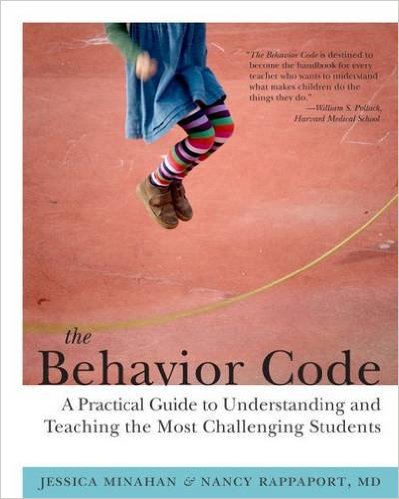
We have written before about self-regulation strategies and teaching children mindfulness; some of these ideas and tools may be effective interventions for helping students cope with anxiety and behavioral difficulties. However, another excellent resource is an informative book written by Dr. Nancy Rappaport and Jessica Minahan titled The Behavior Code: A Practical Guide to Understanding and Teaching the Most Challenging Students. The Behavior Code provides strategies to determine causes and patterns of behavior in order to effectively de-escalate challenging situations. The book is also a treasure trove of worksheets and practical resources.
The authors also provide some tangible tips for working with anxious students:
- It is common for teachers or caregivers to publicly praise positive behavior. However, children with anxiety don’t always want any extra attention from peers, which can make this strategy ineffective. Private or non-verbal praise is often better for students with anxious tendencies.
- Students with anxiety often enter into negative thinking cycles. Vague or non-specific praise is easy for them to dismiss. The authors suggest using fact-based praise with specific examples of how the student has done.
- There are new biofeedback tools that can turn calming down into a game for students. One such tool is EmWave, which gives students a black and white picture that will slowly fill with color as the device monitors the child’s heart rate and the student begins to calm.
Friday, January 29, 2016
Tuning In To Your Body To Help Cope With Stress
“Listen to your heart.” It’s a well-worn cliché. However, it is advice worth following, according to recent research reported in The New York Times. Increased heart rate is one of the numerous physical symptoms, along with shallow breathing and a palpable surge of adrenaline, experienced during times of stress. In moderation, it can be helpful; but in excess, it can undermine performance. The degree to which this physiological arousal and its accompanying emotional state then returns to normal (i.e., resilience) varies among people. Dr. Martin Paulus and colleagues set out to learn more about why this occurs.
Their study involved healthy adults who were asked to complete a questionnaire about their self-perceived levels of emotional and physical resilience. The subjects were then put in brain scanning machines and given face masks that the researchers controlled to create periodic moments of breathlessness. Those who had rated themselves low in resilience had distinct response patterns. As their masks threatened to close, their brain scans displayed relatively little activity in the areas that monitor body signals. When breathing then became difficult, they displayed relatively high levels of physiological arousal. In contrast, subjects who had rated themselves higher in resilience showed an almost opposite activity pattern, which paralleled that of soldiers and elite athletes who had participated in an earlier study. In these cases, when the masks threatened to close, the portions of the subjects’ brains that process body signals were highly active. Despite this, activity in the brain areas that intensify bodily arousal was rather slight. In other words, these subjects closely monitored the initial physical signs of stress but then diminished the response.
This suggests that paying close attention to your body may be important to effectively coping with stress. It makes sense, then, that mindfulness training programs such as one recently employed in Baltimore public schools have been shown to be so beneficial. So “Listen to your heart” is more than just a song from the 80's or the advice from your otherwise at-a-loss friend. It is an evidence-based strategy for keeping your cool.
Their study involved healthy adults who were asked to complete a questionnaire about their self-perceived levels of emotional and physical resilience. The subjects were then put in brain scanning machines and given face masks that the researchers controlled to create periodic moments of breathlessness. Those who had rated themselves low in resilience had distinct response patterns. As their masks threatened to close, their brain scans displayed relatively little activity in the areas that monitor body signals. When breathing then became difficult, they displayed relatively high levels of physiological arousal. In contrast, subjects who had rated themselves higher in resilience showed an almost opposite activity pattern, which paralleled that of soldiers and elite athletes who had participated in an earlier study. In these cases, when the masks threatened to close, the portions of the subjects’ brains that process body signals were highly active. Despite this, activity in the brain areas that intensify bodily arousal was rather slight. In other words, these subjects closely monitored the initial physical signs of stress but then diminished the response.
This suggests that paying close attention to your body may be important to effectively coping with stress. It makes sense, then, that mindfulness training programs such as one recently employed in Baltimore public schools have been shown to be so beneficial. So “Listen to your heart” is more than just a song from the 80's or the advice from your otherwise at-a-loss friend. It is an evidence-based strategy for keeping your cool.
Photo credit: modup.net via flickr
Friday, August 22, 2014
Five Years of Blogging at The Yellin Center
In August of 2009, the Yellin Center team was looking for a way to share information with the families, students, and educators we serve. We can't remember which one of us came up with the idea of creating a blog, but we soon became bloggers - learning how to post our pieces and to add links, photos, videos, and labels. Five years and almost 800 posts later, The Yellin Center Blog is still rolling along, with new posts two or three times each week. Some of these feature specific authors, like the terrific blogs by Learning Specialist Beth Guadagni, or the legal blogs by Susan Yellin, Esq., our Director of Advocacy and Transition Services, or the blogs on medical or policy issues written by Dr.Yellin.
Even well after they are posted, our blog posts continue to help us answer questions from parents and students. Some topics -- especially questions about special education laws and procedures -- just make more sense when they are set out in writing and parents tell us it is very helpful to be directed to a specific blog as a starting point for helping them with a question.
Each of our posts is "tagged" with labels, noting the topics it covers. When you look at the home page for our blog, you can either search a specific topic, or you can browse the topics we have covered and just click on the one that interests you. The list of topics has variable type size; the more posts that include that particular topic, the larger the font in which it appears. So, subjects like books, reading, research, and resources have appeared quite often, while we have only written one blog about snow days.
We welcome guest bloggers and have had parents, students, and teachers write about their personal experiences. Please let us know if you would like to contribute a guest blog. The list below does not have live links to our posts, but we thought you would find it interesting to see the wide range of topics we have covered. You can find the active version of this list at the blog home page and click on those subjects which interest you. Happy reading!
504 AAP accommodations act activities ADAaddiction adhd admissions adolescence adoptionadvocacy advocates for children affinities after school programs agriculture algebra alphabet annual reviewanxiety apps Arise Coalition art assessmentassistive technology athletics attendance attentionattorneys audiobooks authors awards babies back to school backpacks baseball behavior behavioral therapybiography blogs boarding schools BOCES book listsbook reviews book series books boys brainbrain training brain trauma brainstorming breast feedingBroadway bullying busing caffeine calendars campcannabis careers CAST celebrations censorshipcharacter charter schools child find child safety class size classical music clothing college college admissions college counseling college transitioncomics common core curriculum communicationcommunity college community resources compensatory education computers concussion conferencesConnecticut contest controlled books cooking cool tools COPAA core curriculum court decisions craftscreativity CTT culture curiosity current eventscurriculum decoding degrees demystification depressiondevelopment diagnosis digital media diplomadiplomas disability discipline diversity Dr. Yellin dreamsdriving drugs DSM dyscalculia dysgraphia dyslexiaearly childhood Early Intervention ebooks editingedtech education elections elementary elementary schools emotions empathy employers employmentengineering English language learners ERB estimatingESY evaluation events executive function exerciseextracurricular activities eye health Facebook FAFSAfairtest family family activities FAPE farming farmsFERPA festivals fiction film final exams financesfinancial aid financial education finding schoolsflashcards food football foreign language frontloadingfunding games gaming gender geography Germanygift ideas girls grade retention graduation grammargraphic novels graphomotor guns handwriting healthhealth literacy healthy eating hearing hi-lo books high school highlighting HIPAA historical fiction historyholidays homework humor IDEA IEE IEPimagination immunizations impulsivity inclusioninspiration instruction instructional materialsinternational education internet use ISAAGNY jobsjuvenile justice kindergarten labels languagelanguages law law school learning learning differences learning difficulties learning disabilities learning strategies legal decisionslegal issues legislation Lexile levels libraries life after high school Links literacy literature litigationlong island LRE LSAT magazines mainstreaming mathMaya Angelou MBrE MCAT media medical collegemedical education medical services medical studentsmedications memory mental health mentorsmetacognition middle school military families military service mindfulness minority issues money motheringmotivation motor skills movies museums music music education neuroscience new jersey new york New York City newborns newsletters nonprofits note takingnumbers nutrition NY State NYC NYC Public Schools NYU occupational therapy online calendarsonline education online learning ophthalmolgyorganization orthopist OWL parent groups parentingPediatrics performances pets philanthropy phonemic awareness physical activity physical therapy playpodcasts poems poetry polls post-secondarypostgraduate programs preschool presentationsPresident Obama preterm infants private schoolsproductivity products Professional Development Seriesprograms psychotherapy public schools readingreading comprehension reading disabilities reading fluency reading instruction recess recommended reads reference materials related services religious schools remediation research research based instruction research tools resilience resourcesresources for parents resources for students resources for teachersreviews RTI saliency SAT scholarships school school law school reform school selection school suppliesschool visits schools science science educationscience projects screens Section 504 self-esteemSEPTA September 11th siblings sleep snow days social media social skills social studies social-emotional education software spatial ordering special education speech speech and language therapyspelling sports STEM stereotypes strategies stressstudents study habits study skills summarizationsummer summer learning loss Susan Yellinsuspension tax deductions teachers teachingtechnology teens television test prep test takingtesting text-to-speech theater therapy time managementtips touch screens toys transition transportationtreatment tuition tutoring typing U.S. Supreme Court UDLUN Convention universal design universities vacationsvalues VESID video video games violence virtual learning vision vision therapy vocabulary vocational education volunteering voting webinar websites workworking memory writer's block writing Yellin Center young adults youTube
Even well after they are posted, our blog posts continue to help us answer questions from parents and students. Some topics -- especially questions about special education laws and procedures -- just make more sense when they are set out in writing and parents tell us it is very helpful to be directed to a specific blog as a starting point for helping them with a question.
Each of our posts is "tagged" with labels, noting the topics it covers. When you look at the home page for our blog, you can either search a specific topic, or you can browse the topics we have covered and just click on the one that interests you. The list of topics has variable type size; the more posts that include that particular topic, the larger the font in which it appears. So, subjects like books, reading, research, and resources have appeared quite often, while we have only written one blog about snow days.
We welcome guest bloggers and have had parents, students, and teachers write about their personal experiences. Please let us know if you would like to contribute a guest blog. The list below does not have live links to our posts, but we thought you would find it interesting to see the wide range of topics we have covered. You can find the active version of this list at the blog home page and click on those subjects which interest you. Happy reading!
504 AAP accommodations act activities ADAaddiction adhd admissions adolescence adoptionadvocacy advocates for children affinities after school programs agriculture algebra alphabet annual reviewanxiety apps Arise Coalition art assessmentassistive technology athletics attendance attentionattorneys audiobooks authors awards babies back to school backpacks baseball behavior behavioral therapybiography blogs boarding schools BOCES book listsbook reviews book series books boys brainbrain training brain trauma brainstorming breast feedingBroadway bullying busing caffeine calendars campcannabis careers CAST celebrations censorshipcharacter charter schools child find child safety class size classical music clothing college college admissions college counseling college transitioncomics common core curriculum communicationcommunity college community resources compensatory education computers concussion conferencesConnecticut contest controlled books cooking cool tools COPAA core curriculum court decisions craftscreativity CTT culture curiosity current eventscurriculum decoding degrees demystification depressiondevelopment diagnosis digital media diplomadiplomas disability discipline diversity Dr. Yellin dreamsdriving drugs DSM dyscalculia dysgraphia dyslexiaearly childhood Early Intervention ebooks editingedtech education elections elementary elementary schools emotions empathy employers employmentengineering English language learners ERB estimatingESY evaluation events executive function exerciseextracurricular activities eye health Facebook FAFSAfairtest family family activities FAPE farming farmsFERPA festivals fiction film final exams financesfinancial aid financial education finding schoolsflashcards food football foreign language frontloadingfunding games gaming gender geography Germanygift ideas girls grade retention graduation grammargraphic novels graphomotor guns handwriting healthhealth literacy healthy eating hearing hi-lo books high school highlighting HIPAA historical fiction historyholidays homework humor IDEA IEE IEPimagination immunizations impulsivity inclusioninspiration instruction instructional materialsinternational education internet use ISAAGNY jobsjuvenile justice kindergarten labels languagelanguages law law school learning learning differences learning difficulties learning disabilities learning strategies legal decisionslegal issues legislation Lexile levels libraries life after high school Links literacy literature litigationlong island LRE LSAT magazines mainstreaming mathMaya Angelou MBrE MCAT media medical collegemedical education medical services medical studentsmedications memory mental health mentorsmetacognition middle school military families military service mindfulness minority issues money motheringmotivation motor skills movies museums music music education neuroscience new jersey new york New York City newborns newsletters nonprofits note takingnumbers nutrition NY State NYC NYC Public Schools NYU occupational therapy online calendarsonline education online learning ophthalmolgyorganization orthopist OWL parent groups parentingPediatrics performances pets philanthropy phonemic awareness physical activity physical therapy playpodcasts poems poetry polls post-secondarypostgraduate programs preschool presentationsPresident Obama preterm infants private schoolsproductivity products Professional Development Seriesprograms psychotherapy public schools readingreading comprehension reading disabilities reading fluency reading instruction recess recommended reads reference materials related services religious schools remediation research research based instruction research tools resilience resourcesresources for parents resources for students resources for teachersreviews RTI saliency SAT scholarships school school law school reform school selection school suppliesschool visits schools science science educationscience projects screens Section 504 self-esteemSEPTA September 11th siblings sleep snow days social media social skills social studies social-emotional education software spatial ordering special education speech speech and language therapyspelling sports STEM stereotypes strategies stressstudents study habits study skills summarizationsummer summer learning loss Susan Yellinsuspension tax deductions teachers teachingtechnology teens television test prep test takingtesting text-to-speech theater therapy time managementtips touch screens toys transition transportationtreatment tuition tutoring typing U.S. Supreme Court UDLUN Convention universal design universities vacationsvalues VESID video video games violence virtual learning vision vision therapy vocabulary vocational education volunteering voting webinar websites workworking memory writer's block writing Yellin Center young adults youTube
Subscribe to:
Posts (Atom)